

Solid Tumor CAR Targets

Adoptive cell therapies using genetically modified T cells have been clinically effective against hematological malignancies. However, targeting solid tumors has proven to be challenging. With advancements in tumor biology and immunology, scientists have developed various strategies to overcome these obstacles, potentially leading to a significant breakthrough in combating solid tumors.

ACROBiosystems has developed a series of solid tumor-related target proteins,including MSLN, GPC3, FAP, HER2, and EGFRvIII, covering different species and fluorescent labeling types to support cell therapy in solid tumors. These products can be used for immune screening, CAR detection and PK study to accelerate your cell therapy development research.
Nature reviews. Drug discovery vol. 20,7 (2021): 531-550.

Nature reviews. Drug discovery vol. 20,7 (2021): 531-550.

Product Features

More than 30 + solid tumor targets

Various species including human, mouse, monkey, rabbit, etc

High bioactivity verified by FACS/ELISA/SPR

Alexa Fluor™ 488/555/647, PE, APC, FITC-labels available

Some products have been filed with FDA DMF to support your IND, NDA and BLA

Hot Targets

MSLN
  1. > Mesothelin,MSLN

  2. > Highly expressed in mesothelial tumors, ovarian cancer and pancreatic cancer

  3. > Mesothelin abnormal expression by activating PI3K, ERK and MAPK signaling pathways cause cancer cell proliferation, invasion and metastasis.

GPC3
  1. > Glypican 3,GPC3

  2. > Associated with hepatocellular carcinoma, ovarian carcinoma, and squamous cell carcinoma

  3. > Interacts with various growth factors and signaling molecules in the tumor microenvironment that affect tumor cell proliferation, migration, invasion and development process.

HER2
  1. > Human epidermal growth factor receptor 2,HER2

  2. > Related to breast cancer, gastric cancer, lung cancer and non-small cell lung cancer

  3. > Promotes cell division and the secretion of proteolytic enzymes, thereby promoting tumor invasion and metastasis.

FAP
  1. > Fibroblast activation protein,FAP

  2. > Selectively high expression on the surface of cancer associated fibroblasts (CAF)

  3. > Degrades tumor stroma and promote cancer cell invasion and metastasis in a variety of tumors.

Data

High purity
Human Mesothelin has high purity  verified by SEC-MALS

The purity of Human Mesothelin / MSLN (296-580) Protein, His Tag, premium grade (Cat. No. MSN-H522a) is more than 90% and the molecular weight of this protein is around 32-47 kDa verified by SEC-MALS.
High bioactivity
>High bioactivity verified by ELISA for early antibody screening
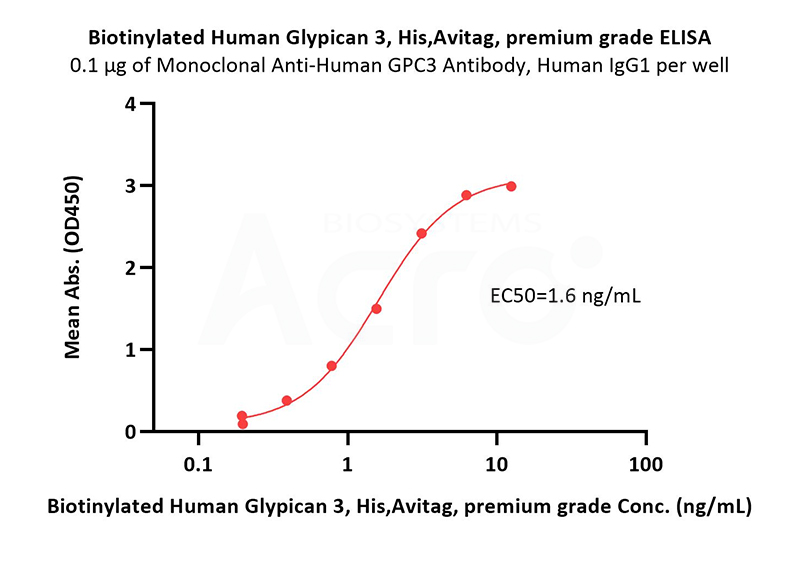
Biotinylated Human GPC3  has high bioactivity verified by ELISA

Immobilized Monoclonal Anti-Human GPC3 Antibody, Human IgG1 at 2 μg/mL (100 μL/well) can bind Biotinylated Human Glypican 3 / GPC3 Protein, His,Avitag™, premium grade (Cat. No.GP3-H82E5) with a linear range of 0.2-3 ng/mL (QC tested).
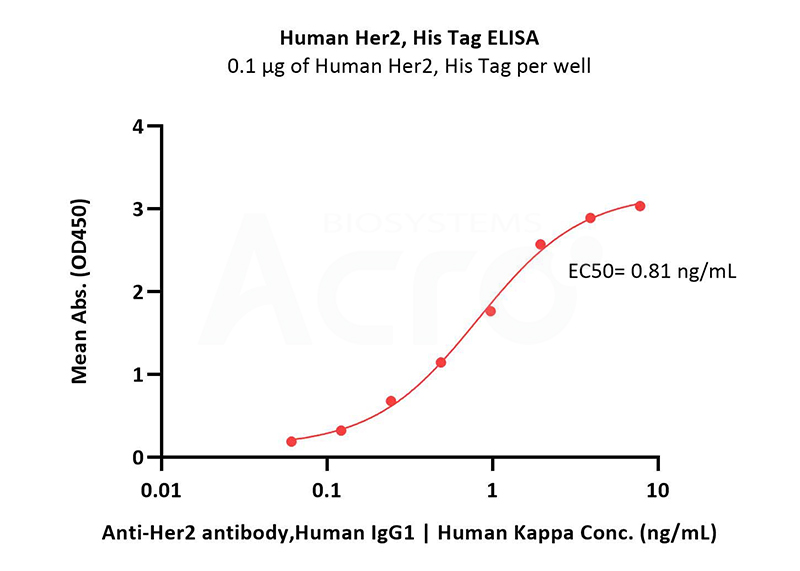
Human Her2 has high bioactivity verified by ELISA

Immobilized Human Her2, His Tag (Cat. No. HE2-H5225) at 0.05 μg/mL (100 μL/well) can bind Trastuzumab with a linear range of 0.2-3 ng/mL (Routinely tested).


>High bioactivity verified by FACS and suitable for CAR detection and PK study
Alexa Fluor™ 488-Labeled Human Mesothelin(Cat. No. MSN-HA2H9)
Alexa Fluor™ 488-Labeled Human MSLN has high bioactivity verified by FACS

5e5 of anti-MSLN CAR-293 cells were stained with 100 μL of 3 μg/mL of AF488-Labeled Human Mesothelin (296-580), His Tag (Cat. No. MSN-HA2H9) and negative control protein respectively (Fig. C and B), and non-transfected 293 cells were used as a control (Fig. A). AF488 signal was used to evaluate the binding activity (QC tested).

APC-Labeled Human Her2 Protein(Cat. No. HE2-HA2H7)
APC-Labeled Human Her2 has high bioactivity verified by FACS

5e5 of anti-Her2 CAR-293 cells were stained with 100 μL of 1:25 dilution (4 μL stock solution in 100 μL FACS buffer) of APC-Labeled Human Her2, His Tag (Cat. No. HE2-HA2H7) and negative control protein respectively. APC signal was used to evaluate the binding activity (QC tested).

PE-Labeled Human GPC3 Protein(Cat. No. GP3-HP2E3)
PE-Labeled Human GPC3 has high bioactivity verified by FACS

5e5 of anti-GPC3 CAR-293 cells were stained with 100 μL of 1:25 dilution (4 μL stock solution in 100 μL FACS buffer) of PE-Labeled Human Glypican 3, His Tag (Cat. No. GP3-HP2E3) and negative control protein respectively. PE signal was used to evaluate the binding activity (QC tested).

More CAR-T related products

FAQ

Q

What are the leading strategies for improving the efficacy of CAR-T therapy in solid tumors?

Current strategies to overcome the limitations of CAR-T therapy for solid tumors fall into three major categories. First, optimizing antigen recognition through dual-target, tandem, and other multispecific CAR designs to address antigen heterogeneity and minimize antigen escape. Second, remodeling the tumor microenvironment using armored CAR-T approaches or by targeting cancer-associated fibroblasts (CAFs) and fibroblast activation protein (FAP) to overcome immunosuppression and physical barriers to tumor infiltration. Third, combining CAR-T therapy with immune checkpoint inhibitors, oncolytic viruses, novel delivery approaches, localized administration, or in vivo CAR engineering technologies to alleviate T-cell exhaustion and enhance antitumor immune responses. These innovative strategies all rely on high-quality target proteins for functional validation. ACROBiosystems offers a comprehensive portfolio of recombinant proteins covering major solid tumor targets, supporting multi-target CAR validation, combination therapy evaluation, and next-generation CAR screening to accelerate the development of more effective solid tumor CAR-T therapies.
Q

What is armored CAR-T, and how does it overcome the immunosuppressive tumor microenvironment?

Armored CAR-T cells are next-generation genetically engineered CAR-T therapies designed to actively remodel the tumor microenvironment. Through genetic modification, CAR-T cells are engineered to locally secrete functional cytokines such as IL-12, IL-15, and IL-18, or to express extracellular matrix-degrading enzymes. These modifications enhance CAR-T cell survival and expansion in vivo while recruiting innate immune cells to convert immunologically "cold" tumors into "hot" tumors. At the same time, degradation of the extracellular matrix helps overcome physical barriers and significantly improves CAR-T infiltration into solid tumors.
Q

Which targets currently show the greatest promise for solid tumor CAR-T development?

Several clinically validated targets have emerged as promising candidates for solid tumor CAR-T development. HER2 is a well-established target across multiple cancer types, including breast, gastric, and lung cancers. EGFR and its tumor-specific mutant EGFRvIII are important targets for glioblastoma and epithelial malignancies, with EGFRvIII offering enhanced tumor specificity. GPC3 is a highly specific target for hepatocellular carcinoma with minimal expression in normal adult tissues. MSLN is highly expressed in mesothelioma, pancreatic cancer, and ovarian cancer, while CLDN18.2 has become a leading target for gastric and pancreatic cancers. ACROBiosystems provides commercially available recombinant proteins for all of these major targets, combining high biological activity with excellent batch-to-batch consistency to support target validation, antibody screening, and functional characterization throughout CAR-T development.
Q

What is the most critical safety concern in solid tumor CAR-T development?

On-target, off-tumor toxicity is the most significant safety challenge in solid tumor CAR-T therapy. Unlike lineage-specific antigens in hematologic malignancies, most solid tumor targets—including HER2, MSLN, GPC3, and CLDN18.2—are tumor-associated antigens that are also expressed at low physiological levels in normal tissues. As a result, CAR-T cells may damage healthy organs while attacking tumor cells, leading to severe or even irreversible toxicities that limit therapeutic dosing and narrow the treatment window. Accurate evaluation of CAR specificity is therefore essential for minimizing off-tumor risks. ACROBiosystems offers high-purity recombinant target proteins with native conformations for CAR specificity assessment and cross-reactivity studies, supporting the development of safer and more selective CAR-T therapies.
Q

Why is CAR-T therapy much less effective in solid tumors than in hematologic malignancies?

Compared with hematologic malignancies, solid tumors present three major biological barriers that significantly limit the efficacy of CAR-T therapy. First, solid tumors possess a highly immunosuppressive tumor microenvironment (TME), enriched with suppressive immune cells, inhibitory cytokines, and immune checkpoint molecules that impair CAR-T function and promote T-cell exhaustion. Second, substantial antigen heterogeneity within solid tumors leads to variable antigen expression among tumor cells, making antigen escape a frequent cause of treatment failure. Third, dense extracellular matrices, abnormal tumor vasculature, and elevated interstitial pressure create formidable physical barriers that prevent CAR-T cells from efficiently infiltrating tumor tissue. High-quality target antigens are essential for studying tumor biology and identifying effective CAR candidates. ACROBiosystems provides a comprehensive portfolio of recombinant proteins covering major solid tumor targets, featuring native conformations and stable biological activity to support target validation and CAR optimization.
  • Background
  • Product Features
  • Hot Targets
  • Product List
  • Data
  • FAQ