



ADC Internalization Detection Antibody – Labeled with pH-Sensitive Fluorescent Dye

Classic mechanism of action of ADC drugs
 Order
OrderProduct Features
 High Signal-to-Noise Ratio: Strong fluorescence with minimal background
Quick Labeling: Complete in just 10 minutes
pH-Sensitive: Bright signal in acidic intracellular compartments
Fab Region Preserved: Not affect antibody binding
Principles & Applications

Schematic of antibody internalization detection reagent principle
To identify antibodies that not only bind specifically to tumor-associated antigens but also internalize efficiently.
Lead optimization:
To evaluate how variations in antibody structure or conjugation chemistry affect internalization and intracellular trafficking.
Preclinical development:
To confirm that the selected ADC candidate exhibits consistent internalization behavior across relevant cell models.
Mechanism-of-action studies:
To validate the intracellular delivery of the payload and its correlation with cytotoxic effects.
Validation Data

Anti-CD20 Abs and Human IgG1 isotype control were labeled with Antibody Internalization Detection Reagent (Cat.No.IGG-PZF2001). Raji cells were treated with Anti-CD20 Abs-Internalization Detection Reagent conjugate and Isotype control-Internalization Detection Reagent conjugate separately for 2 hours, then analysis by Flow cytometric. APC signal was used to evaluate the activity (Routine tested).

Anti-Her2 Abs and Human IgG1 isotype control were labeled with Antibody Internalization Detection Reagent (Cat.No.IGG-PZF2001). SK-BR-3 cells were treated with Anti-Her2 Abs-Internalization Detection Reagent conjugate and Isotype control-Internalization Detection Reagent conjugate separately for 2 hours, then analysis by Flow cytometric. APC signal was used to evaluate the activity (Routine tested).

SK-BR-3 cells were treated with CellLights Lysosome GFP (green) for 16 hours followed by treatment with Anti-Her2 Abs-Internalization Detection Reagent conjugate and IgG1 Isotype-Internalization Detection Reagent conjugate separately for 16 hours (red), then stained with NucBlue Live ReadyProbes(blue) for 20 minutes and imaged on the EVOS M7000. A. Antibody Internalization Detection Reagent (Cat.No.IGG-PZF2001). B. IgG1 Isotype-Internalization Detection Reagent conjugate. C. Anti-Her2 Abs-Internalization Detection Reagent conjugate. D. Anti-Her2 Abs-Internalization Detection Reagent conjugate(Z-stacking).
Resources
Webinar playback and appointment
‘ADC Potency Analysis and Quality Control Technology Breakthrough’ Webinar Series
ACROBiosystems proudly presents the flagship 'ADC Potency Analysisand Quality Control Technology Breakthrough' live webinar series. This series will systematicallydeconstruct critical aspects ofADC drug development through five coremodules-from potency analysis to quality control technologiesempowering breakthroughs in ADC therapeutics by overcoming keytechnical bottlenecks.

Addressing Challenges in Antibody-Drug Conjugate Development
Here is the brief recap of the webinar:ADCs have the potential to enable 'precision medicine' with a wide market reach.Challenges in ADCs include managing Target Affinity, enhancing payload conjugation, and assessing Payload Delivery in vivo Pharmacokinetics. We can provide high-quality solutions to address these challenges.

Building the Perfect Antibody-based Therapeutic from Selection to Engineering and Manufacturing
In this webinar, discover how advanced techniques such as Al-driven candidate selection optimization of antibody sequences, and precise conjugation methods come together to address some of the current challenges in antibody-based therapeutics.

Resource download

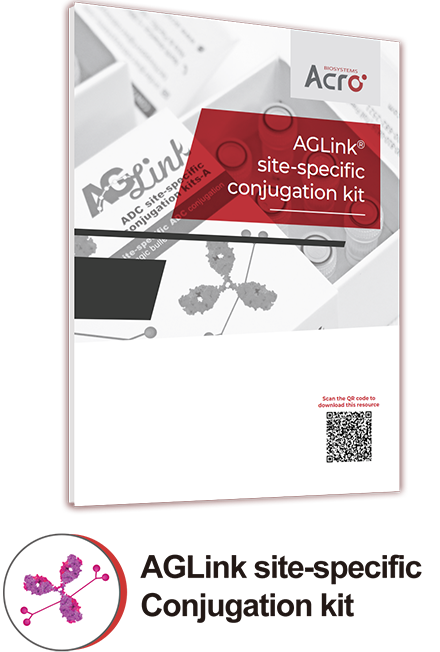

![[Flyer]Fucntional Cell Lines and Development Service](https://console.acrobiosystems.com/public/images/ADC_Conjugation_Kit/ADC_Conjugation_Kit2025111401.png)

Poster/Application Note Download


Promotion
FAQ
How does pH-sensitive fluorescence distinguish internalized antibodies from surface-bound antibodies?
What does a pH-sensitive antibody internalization assay measure?
What is the difference between IGG-PZF2001 and IGG-PZF2667?
Which antibodies and ADCs are compatible with IGG-PZF2001 and IGG-PZF2667?
Can the internalization detection reagents be used for both flow cytometry and fluorescence imaging?
How have ACROBiosystems antibody internalization detection reagents been validated?
References
1. Beck, A., Goetsch, L., Dumontet, C. et al. Strategies and challenges for the next generation of antibody–drug conjugates. Nat Rev Drug Discov 16, 315–337 (2017). https://doi.org/10.1038/nrd.2016.268
2. Romero, D. Pembrolizum*b tunes up chemotherapy in cervical cancer. Nat Rev Clin Oncol 18, 747 (2021). https://doi.org/10.1038/s41571-021-00570-5
- Background
- Product List
- Product Features
- Principles & Applications
- Validation Data
- Resources
- Promotion
- FAQ
- References