
TCR-CD3 Complex

Tumor immunotherapy and autoimmune disease treatment are key areas in global immune drug development. CD3-targeted T-cell engagers (TCEs) have shown strong potential in both fields by enabling precise T-cell redirection. However, adverse events such as cytokine release syndrome (CRS) remain a major challenge, limiting their therapeutic window and broader clinical utility.
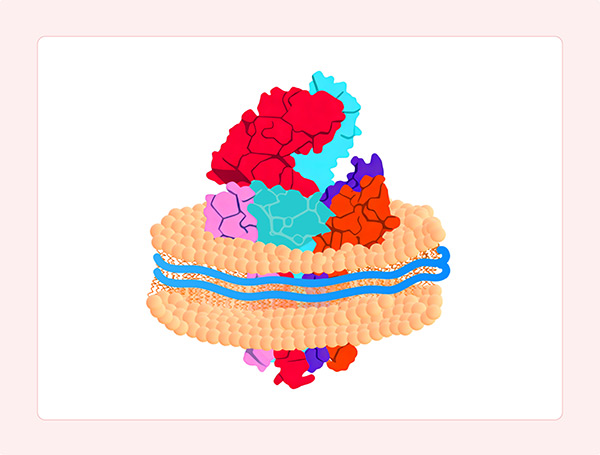
Under physiological conditions, CD3 exists as an integral component of the multi-subunit TCR–CD3 complex on the T-cell surface, mediating antigen recognition and T-cell activation. Screening based on the native TCR-CD3 complex better mimics physiological conditions, enabling more accurate evaluation of antibody binding and function. It also facilitates comprehensive epitope mapping across CD3, helping identify optimal epitopes that balance potent immune activation with reduced CRS risk.
To address this critical need, we offer TCR–CD3 complex proteins that faithfully reproduce the complete assembly and native conformation of TCR and CD3 subunits. This delivers a robust platform for CD3-targeted antibody discovery and evaluation, accelerating the development of safer and more effective next-generation immunotherapies.

Product Features

Native-like Conformation:

Replicates the complete transmembrane complex, delivering true-to-life physiological relevance.

Comprehensive-Validated Performance:

Proven by anti-CD3, anti-TCR αβ antibody and pMHC binding assays, confirming both structural integrity and functional activity.

Multi-scenario Formats:

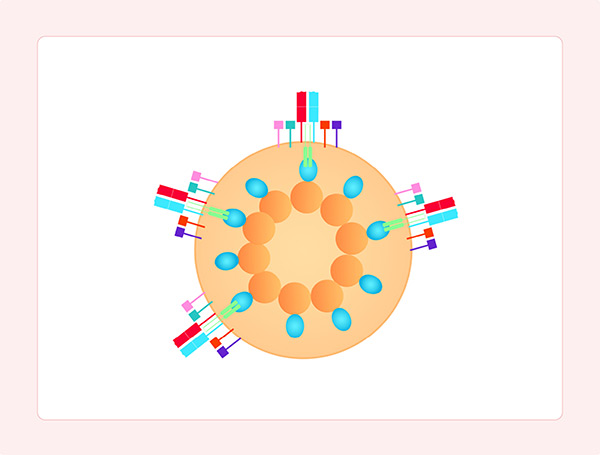
VLP / Detergent / Nanodisc-pro options available, fully supporting diverse flexible R&D workflows.
TCR-CD3 (VLP)
TCR-CD3 (VLP)
Recommended Applications: Immunization, Screening, Validation (ELISA/Cell-Based Assays)
TCR-CD3 (Detergent)
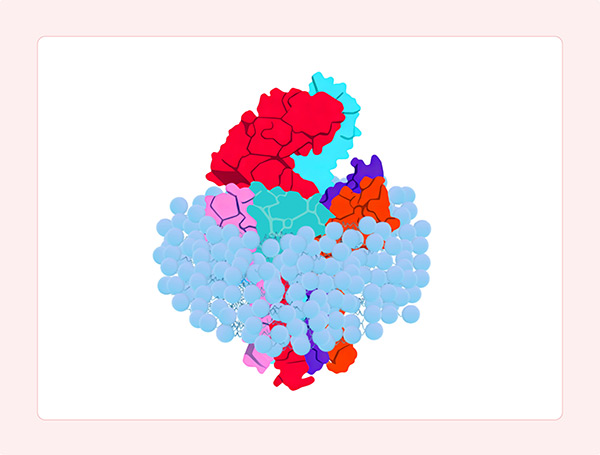
TCR-CD3 (Detergent)
Recommended Applications: Screening, Validation (ELISA/SPR)
TCR-CD3 (Nanodisc-pro)
Recommended Applications: Screening, Validation (ELISA/SPR/Cell-Based Assays)

Validation Data

CD3 Domain Validation: Specific binding to multiple anti-CD3 antibodies

CD3 Domain Validation-1

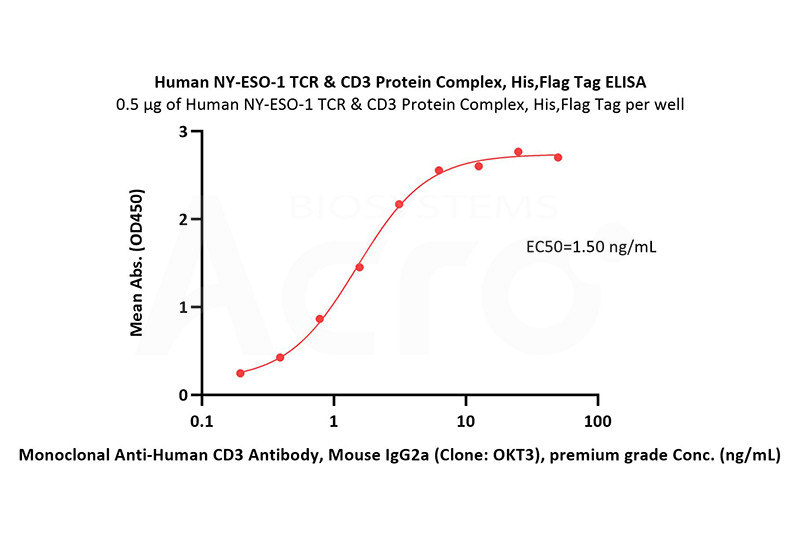
Immobilized Human NY-ESO-1 TCR & CD3 Protein Complex, His,Flag Tag (Cat. No. NYZ-H52D3) at 5 μg/mL (100 μL/well) can bind Monoclonal Anti-Human CD3 Antibody, Mouse IgG2a (Clone: OKT3), premium grade (Cat. No. CDE-M120a) with a linear range of 0.2-3 ng/mL (QC tested).

Request Protocol
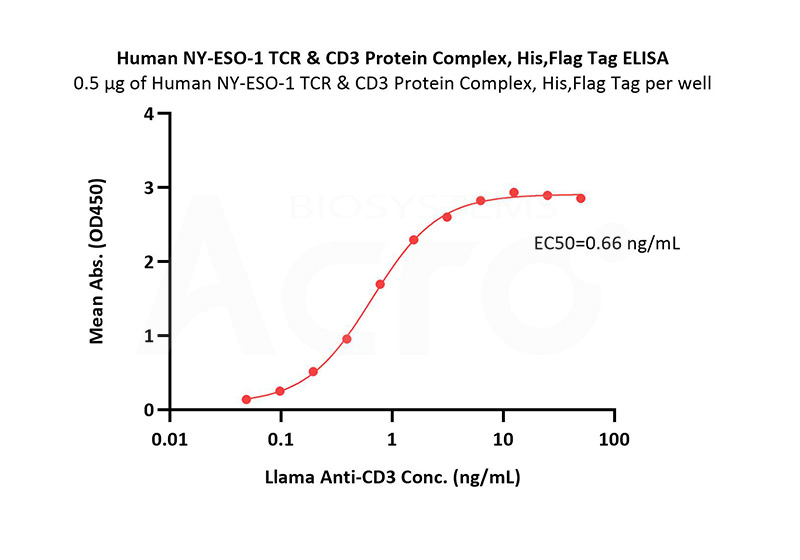
CD3 Domain Validation-2

Immobilized Human NY-ESO-1 TCR & CD3 Protein Complex, His,Flag Tag (Cat. No. NYZ-H52D3) at 5 μg/mL (100 μL/well) can bind Llama Anti-CD3 with a linear range of 0.05-2 ng/mL (Routinely tested).

Request Protocol
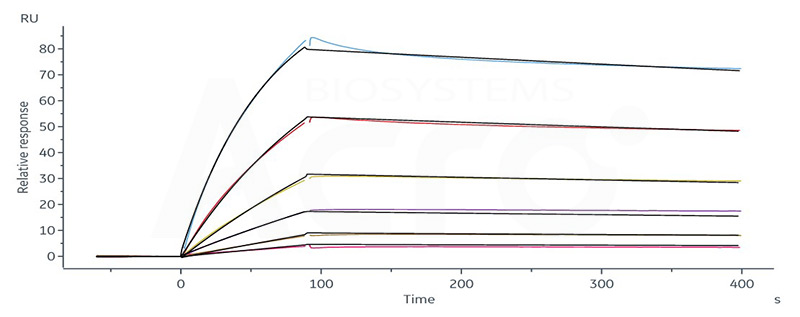
CD3 Domain Validation-3

Monoclonal Anti-Human CD3 Antibody, Mouse IgG2a (Clone: OKT3), premium grade (Cat. No. CDE-M120a) captured on CM5 chip via anti-mouse antibodies surface can bind Human NY-ESO-1 TCR & CD3 Protein Complex, His,Flag Tag (Cat. No. NYZ-H52D3) with an affinity constant of 2.72 nM as determined in a SPR assay (Biacore 8K) (Routinely tested).

Request Protocol
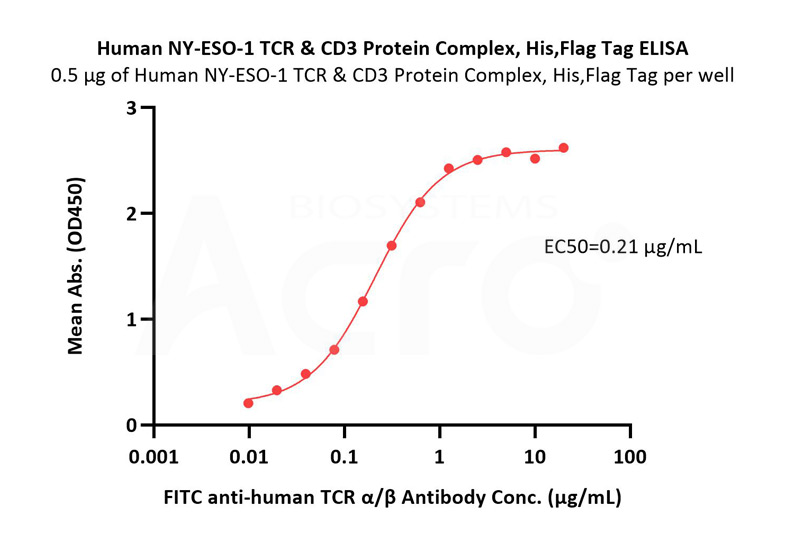
TCR Domain Validation: Specific binding to anti-TCR α/β antibody

TCR Domain Validation

Immobilized Human NY-ESO-1 TCR & CD3 Protein Complex, His,Flag Tag (Cat. No. NYZ-H52D3) at 5 μg/mL (100 μL/well) can bind FITC anti-human TCR α/β Antibody with a linear range of 0.01-0.625 μg/mL (Routinely tested).

Request Protocol
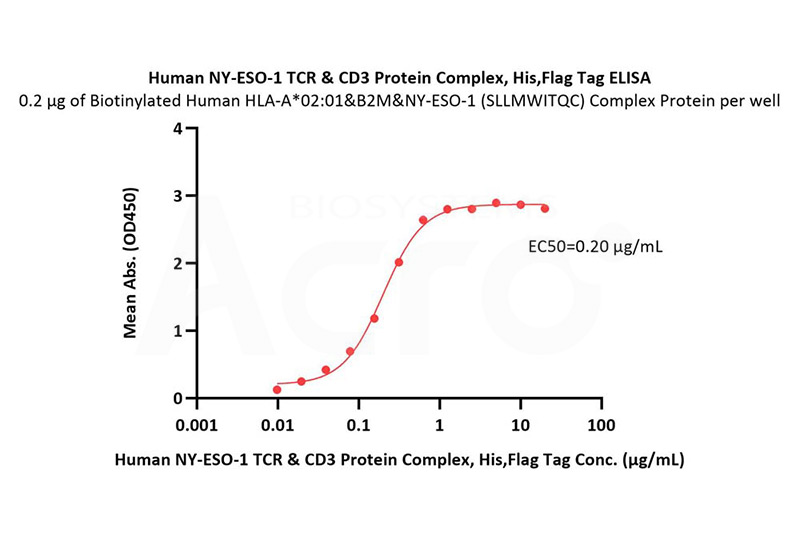
TCR Functional Validation: Specific binding to pMHC

TCR Domain Validation

Immobilized Biotinylated Human HLA-A*02:01&B2M&NY-ESO-1 (SLLMWITQC) Complex Protein (Cat. No. HL1-H82E6) at 2 μg/mL (100 μL/well) on streptavidin (Cat. No. STN-N5116) precoated (0.5 μg/well) plate can bind Human NY-ESO-1 TCR & CD3 Protein Complex, His,Flag Tag (Cat. No. NYZ-H52D3) with a linear range of 0.01-0.313 μg/mL (QC tested).

Request Protocol

Related Product Recommendations
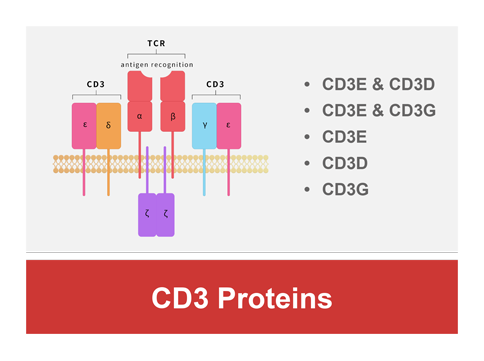
CD3 Proteins
Bridging ELISA Kits
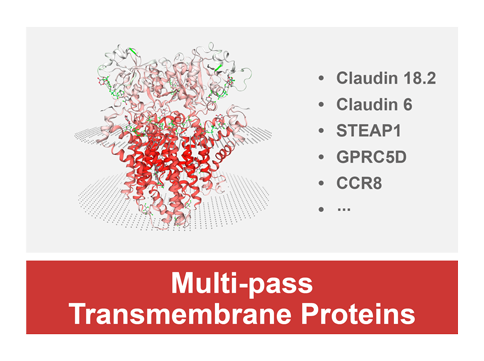
Multi-pass Transmembrane Proteins
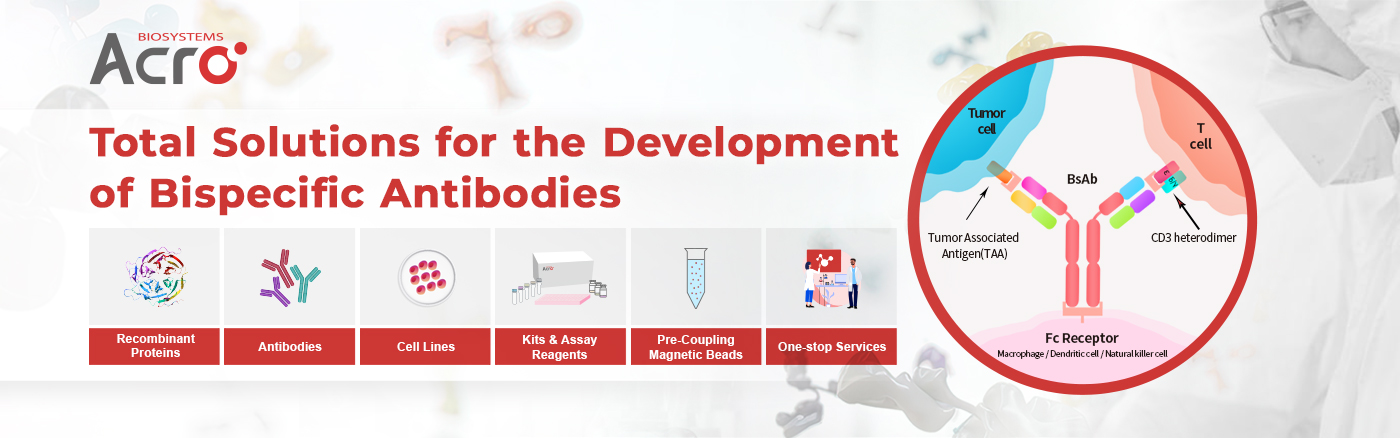
Total Solutions for the Development of Bispecific Antibodies

FAQ

Q

How does the TCR-CD3 complex contribute to antigen recognition and T-cell signaling?

The TCR-CD3 complex connects antigen recognition with T-cell signaling. The TCRαβ heterodimer recognizes peptide-MHC, while the associated CD3 subunits provide signaling components that transmit activation signals following receptor engagement. Studying the assembled TCR-CD3 complex can help researchers investigate receptor interactions, T-cell activation mechanisms, and CD3-targeting strategies.
Q

What are the advantages of screening antibodies against the full TCR-CD3 complex?

Individual CD3 subunits may not fully reproduce the structural context of the assembled receptor. An assembled TCR-CD3 complex incorporates the TCRαβ heterodimer together with CD3ε, CD3δ, CD3γ, and CD3ζ, providing a multi-subunit target for evaluating antibody binding and epitope recognition in a more representative receptor context.
Q

Which TCR-CD3 format should I choose for my research application?

Choose the format based on receptor presentation and assay requirements. VLP provides membrane-associated presentation for immunization, screening, ELISA, and cell-based assays. Detergent offers a solubilized complex for screening, ELISA, and SPR/BLI. Nanodisc-pro combines a membrane environment with soluble handling for screening, ELISA, SPR/BLI, and cell-based assays.
Q

How can TCR-CD3 complexes help optimize the specificity and safety of TCE candidates?

CD3-binding epitopes directly dictate T-cell activation thresholds and cytokine release profiles. The full TCR-CD3 complex enables precise epitope characterization via its native multi-subunit structure. Benchmarking TCE candidates against this physiological target identifies molecules with high cytotoxic potency and minimal CRS/off-target toxicity risks, effectively widening the therapeutic window.
Q

How is the TCR-CD3 complex validated for structural integrity and functional activity?

ACROBiosystems' TCR-CD3 complexes are produced by eukaryotic co-expression of TCRαβ and CD3 subunits to support defined assembly. Validation includes specific binding to anti-CD3 and anti-TCR αβ antibodies, as well as peptide–MHC (pMHC) binding, supporting the structural integrity and functional activity of the assembled receptor.
  • Background
  • Product Features
  • Product List
  • Validation Data
  • Related Product Recommendations
  • FAQ