

Mein Warenkorb

FcRn(Neonatal Fc Receptor)

Why Is FcRn a Critical Focus in Drug Discovery?
The neonatal Fc receptor (FcRn) is widely expressed across human tissues and functions as the pivotal molecular regulator of IgG and serum albumin homeostasis. Structurally, FcRn assembles as a non-covalent heterodimer composed of an alpha chain (FCGRT) and a beta-2 microglobulin (B2M) subunit, both required for its physiological activity.
FcRn-mediated IgG and serum albumin recycling
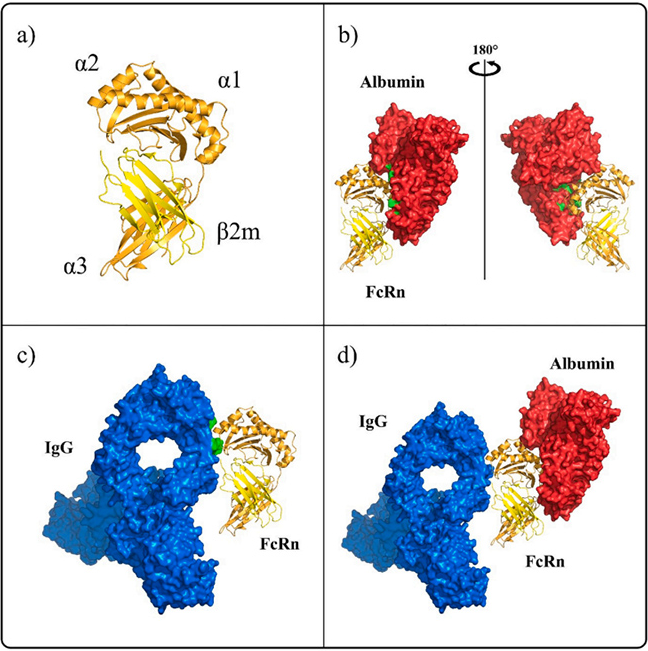
Human FcRn interaction with ligands IgG and albumin
FcRn binds IgG and serum albumin via distinct epitopes, avoiding interference between the two ligands. In antibody R&D, FcRn is used to evaluate IgG half-life and guide Fc engineering and lead candidate screening. As a validated target in autoimmune diseases, FcRn is involved in promoting the reduction of pathogenic IgG levels, providing a therapeutic strategy for disorders such as rheumatoid arthritis. It also supports immunotherapy and drug delivery research through its roles in immunomodulation and albumin transport.
Human FcRn interaction with ligands IgG and albumin

Core Research Applications of FcRn

Antibody Half-Life Evaluation and Fc Engineering Optimization
Assess FcRn-mediated antibody recycling to estimate in vivo half-life, screen Fc variants, and evaluate pharmacokinetic (PK) properties and developability of candidate antibodies.
FcRn Inhibitor Screening and Functional Characterization
Support the development and evaluation of FcRn inhibitors (antibodies, Fc fragments, peptides, or proteins) by assessing their ability to block FcRn–IgG binding in vitro.
Albumin Binding and Delivery Studies
Study FcRn-mediated albumin recycling and transport, supporting research on albumin fusion proteins and drug delivery systems.

Why Choose ACROBiosystems' FcRn Products?

• End-to-End Workflow Coverage:Recombinant proteins, TR-FRET binding kits, and stable cell lines for workflows from early screening to preclinical research.
• Reliable Validation Data:Binding activity and functionality validated by SPR, BLI, SEC-MALS, and FACS.
• High Quality and Stable Supply:Strict quality control and high batch consistency supporting reproducible research and IND-enabling studies.

Products & Advantages

FcRn Proteins
FcRn Proteins
Applications
Fc–FcRn binding
Half-life optimization
Albumin studies
Cross-species validation
Key Advantages
SEC-MALS verified purity (>95%)
SPR/BLI-validated high affinity
Low endotoxin option (<10 EU/mg)
Heterodimer format expressed in HEK293 cells for proper folding and PTMs
Multi-species & tag options, including Human, Mouse, Cynomolgus and Rhesus macaque
FcRn TR-FRET Binding Kits
Applications
Inhibitor screening
Fc binding comparison
Early half-life assessment
Key Advantages
0.5–1 hour no-wash protocol (HTS compatible)
Comprehensive Validation: Tested across antibody subtypes and drugs
High batch-to-batch consistency
Accurate detection aligning with SPR binding trends

FcRn Functional Cell Lines
Applications
Antibody screening
Early half-life assessment
FcRn functional validation
Key Advantages
Stable expression over >20 passages
Commercially licensed for global research use
Application data supporting assay development and validation
Suitable for IND-enabling studies

Product List

FcRn Recombinant Proteins
TR-FRET FcRn Binding Kits
FcRn Functional Cell Lines
Cat. No.MoleculeProduct DescriptionVorbestellen/Bestellen
Bestellen
Bestellen
Bestellen
Bestellen
Bestellen
Bestellen
Bestellen
Bestellen
Bestellen
Bestellen
Bestellen
Bestellen
Bestellen
Bestellen
Bestellen
Bestellen
Bestellen
Bestellen
Bestellen
Bestellen
Bestellen
Bestellen

Technical Validation Data

Heterodimeric FcRn proteins verified by SEC-MALS
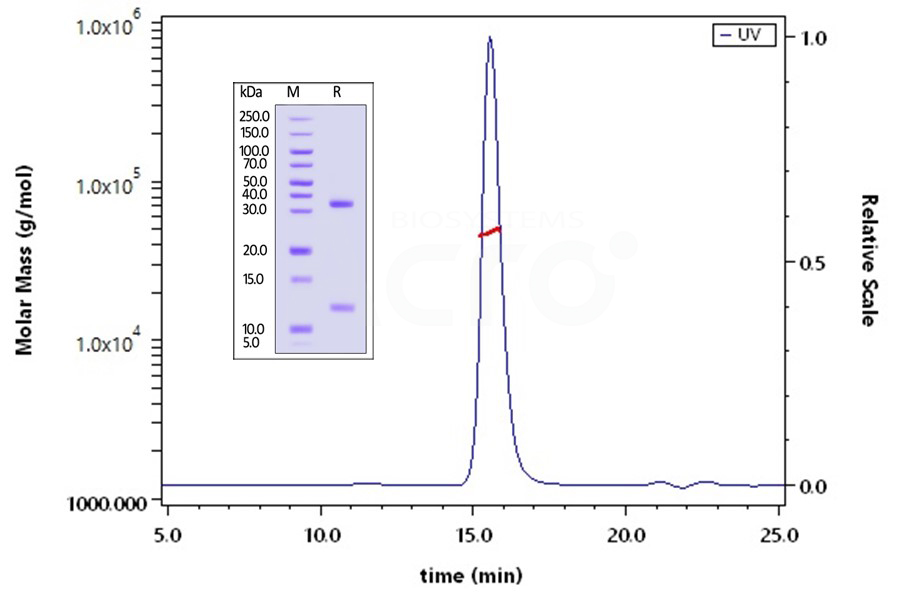
Heterodimeric FcRn proteins verified by SEC-MALS

The purity of Canine FCGRT&B2M Heterodimer Protein, His Tag&Tag Free (Cat. No. FCM-C52W8) is more than 90% and the molecular weight of this protein is around 43-60 kDa verified by SEC-MALS.

Human FcRn–Herceptin binding affinity (SPR validated)
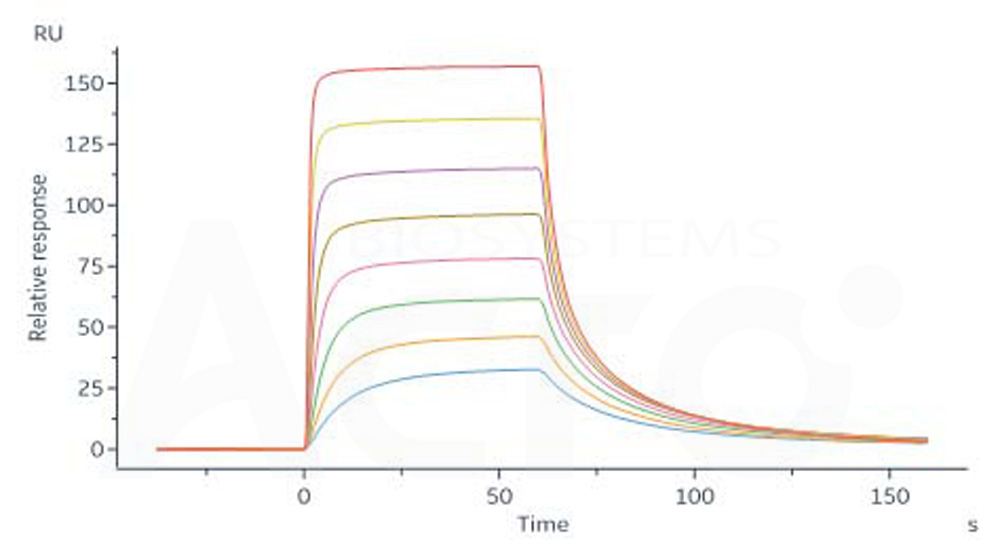
Human FcRn–Herceptin binding affinity (SPR validated)
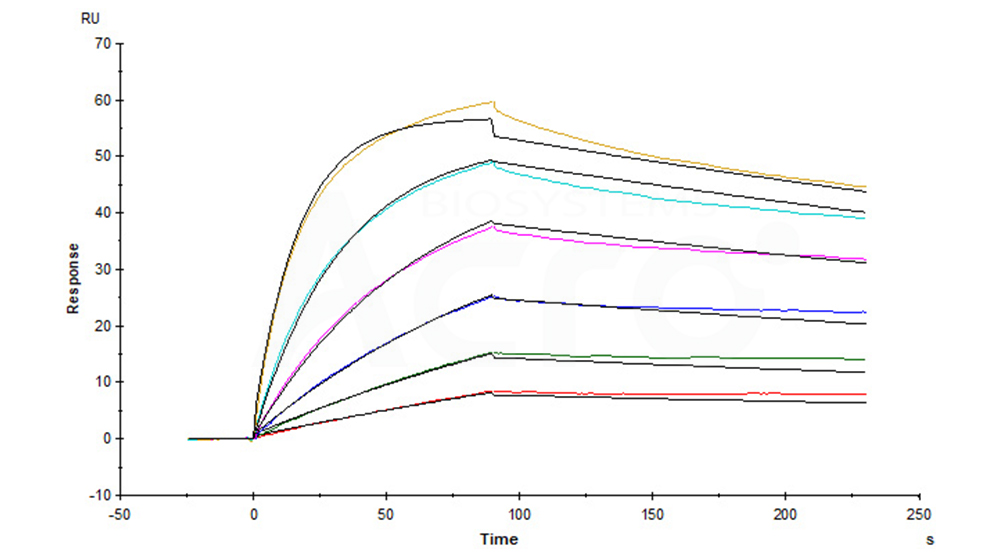
Immobilized Biotinylated Human FCGRT&B2M Heterodimer Protein, His,Avitag (Cat. No. FCM-H82W7) on SA Chip can bind Herceptin® with an affinity constant of 0.267 μM as determined in a SPR assay (Biacore 8K) (QC tested).

Request Protocol

Mouse FcRn–Herceptin binding affinity (SPR validated)

Mouse FcRn–Herceptin binding affinity (SPR validated)

Mouse FCGRT&B2M Heterodimer Protein, His Tag (Cat. No. FCM-M52W8) captured on NTA-Series S sensor chip can bind Herceptin with an affinity constant of 2.52 nM as determined in a SPR assay (Biacore T200) (Routinely tested).

Request Protocol

FcRn–Herceptin binding affinity (BLI validated)
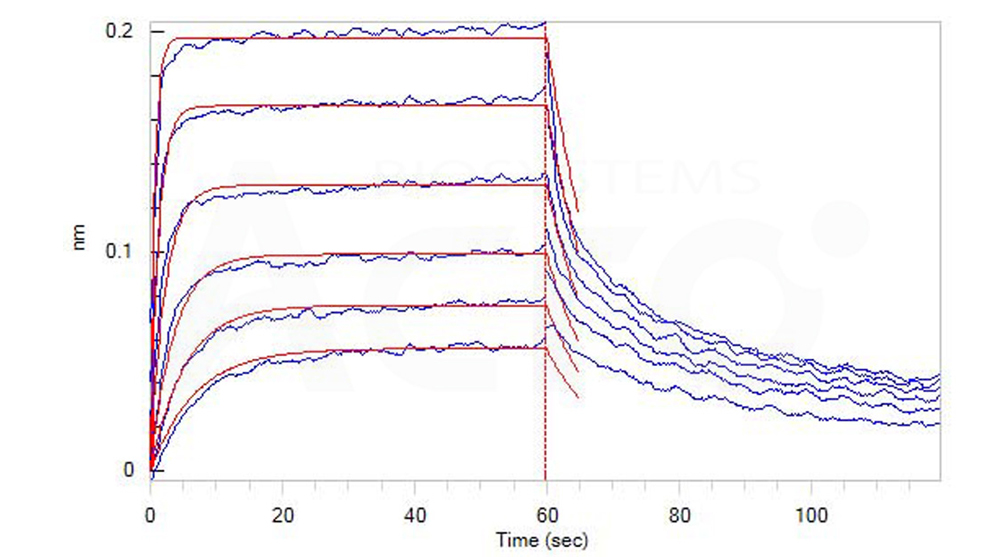
FcRn–Herceptin binding affinity (BLI validated)

Loaded Cynomolgus / Rhesus macaque FCGRT&B2M Heterodimer Protein, His Tag&Strep II Tag (Cat. No. FCM-C5284 ) on SA Biosensor via Biotin his antibody, can bind Herceptin with an affinity constant of 0.13 μM as determined in BLI assay (ForteBio Octet Red96e) (Routinely tested).

Request Protocol

FCGRT&B2M–Serum Albumin binding affinity (BLI validated)
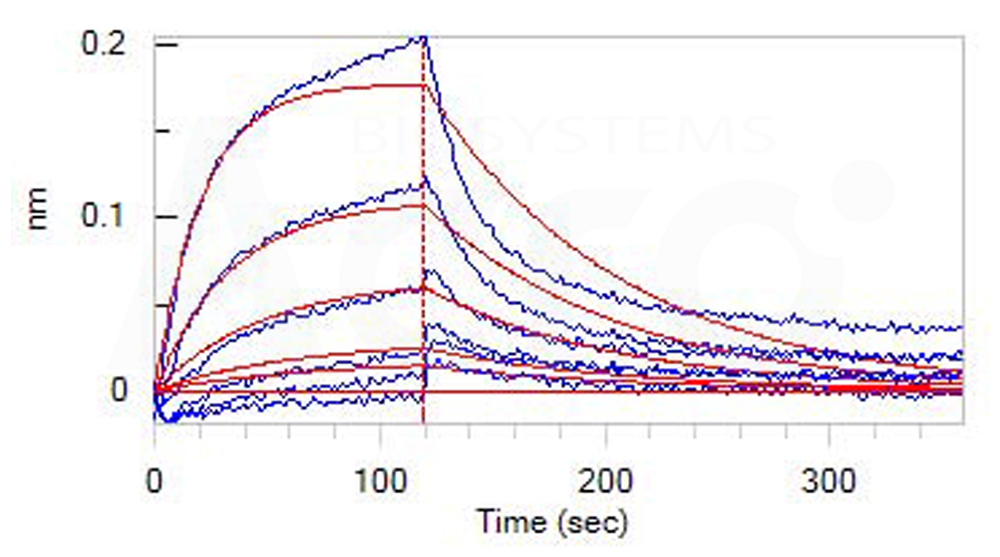
FCGRT&B2M–Serum Albumin binding affinity (BLI validated)

Loaded Biotinylated Human FCGRT&B2M Heterodimer Protein, His,Avitag (Cat. No. FCM-H82W7) on SA Biosensor, can bind Human Serum Albumin, His Tag (Cat. No. HSA-H5220) with an affinity constant of 0.647 μM as determined in BLI assay (ForteBio Octet Red96e) (Routinely tested).

Request Protocol

FcRn TR-FRET Binding Kit Performance Validation
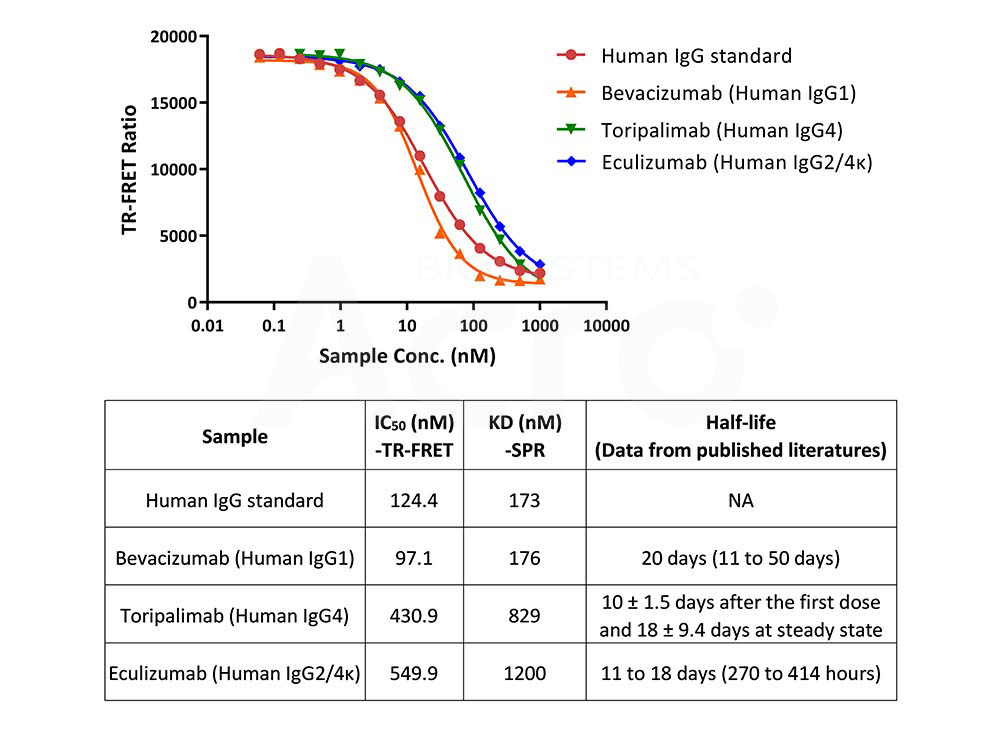
• Antibody half-life evaluation: Three FDA-approved therapeutic antibodies were tested. The IC50 trend is consistent with SPR-derived affinity constants and reported in vivo half-life data, supporting early-stage antibody half-life assessment.
FcRn TR-FRET Binding Kit Performance Validation

The half-lives of these 3 monoclonal antibodies currently in clinical use generally correlate with the binding affinity to FcRn. The kit (Cat.No.FRT-01) has been used to detect 3 FDA approved antibody drugs of different binding affinity to FcRn, and the IC50 trends are consistent with affinity constant from SPR as well as the actual in vivo half-life published.

Request Protocol
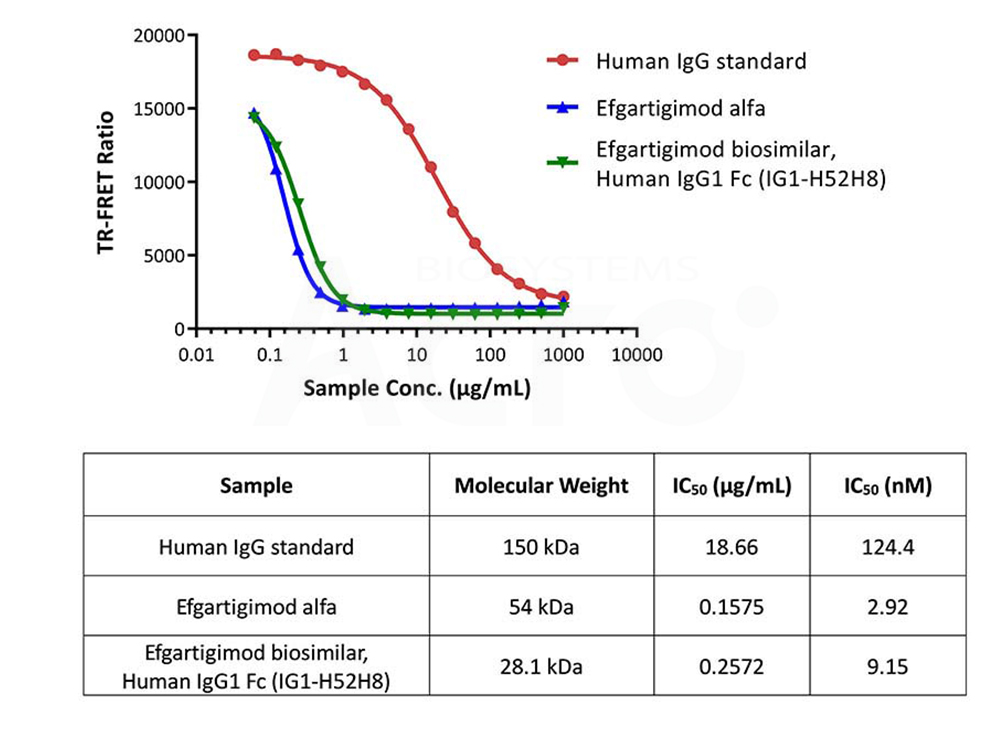
• Inhibitor screening validation: The assay can effectively detect FcRn inhibitors. Efgartigimod and its analogs show clear FcRn blocking activity.
FcRn TR-FRET Binding Kit Performance Validation

The kit (Cat.No.FRT-01) is suitable for the detection of FcRn inhibitors. It shows that both Efgartigimod and its biosimilar, Human IgG1 Fc (C103S, M135Y, S137T, T139E, H316K, N317F) His Tag (Cat. No. IG1-H52H8) exhibit good inhibitory activity in this TR-FRET competition assay.

Request Protocol

Functional Validation of FcRn Stable Cell Lines
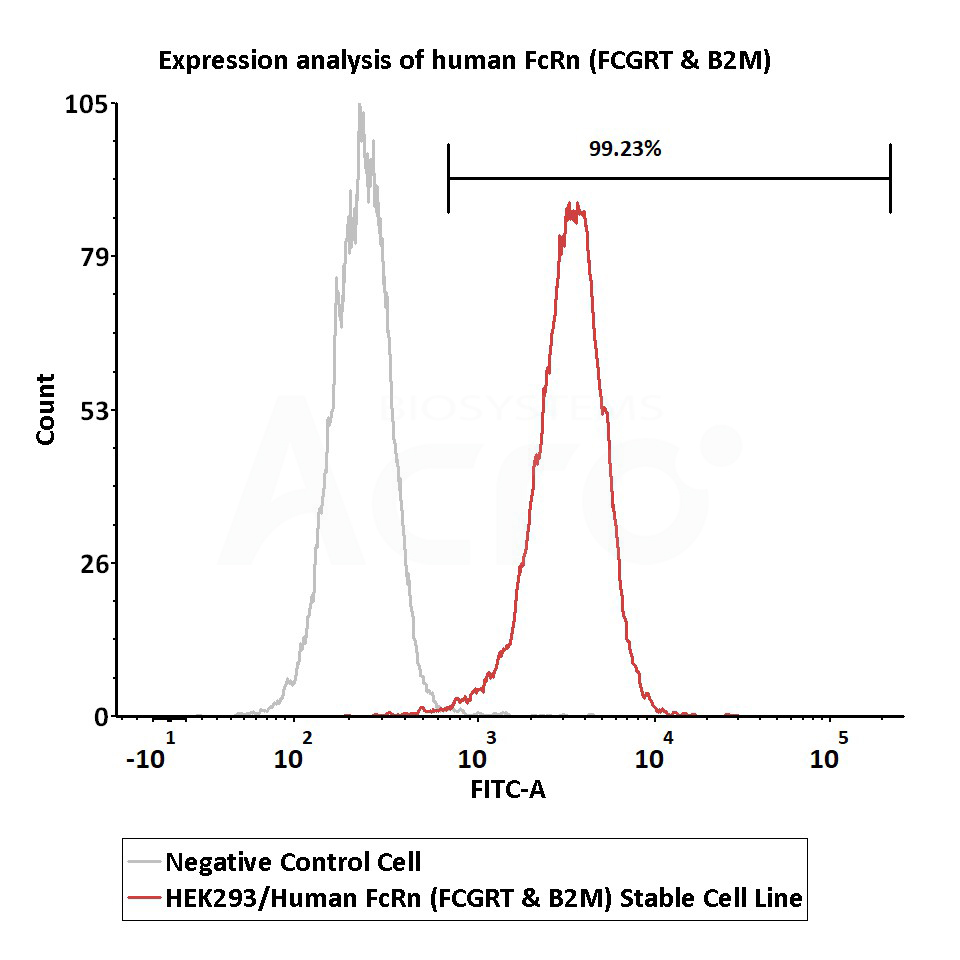
Suitable for cell-based functional evaluation
Functional Validation of FcRn Stable Cell Lines

FACS assay shows that FITC-Labeled Human IgG1 Fc (C103S, M135Y, S137T, T139E, H316K, N317F) Protein, His Tag (Cat. No. IG1-HF2H3) can bind to HEK293/Human FcRn (FCGRT & B2M) Stable Cell Line. HEK293/Human FcRn (FCGRT & B2M) Stable Cell Line (Cat. No. CHEK-ATP079) was red line, negative control HEK293 cells was grey line(QC tested).

Request Protocol

References

  • 1. The mechanism of intestinal uptake and transcellular transport of IgG in the neonatal rat. The Journal of Clinical Inveatigation. 1972, 51:2916–27. Authors:Jones EA, Waldmann TA.

  • 2. FcRn: the neonatal Fc receptor comes of age. Nature Reviews Immunology. 2007,7:715–725. Authors:Derry C. Roopenian, Shreeram Akilesh.

  • 3. Howard. FcRn expression in cancer: Mechanistic basis and therapeutic opportunities. Journal of Controlled Release. 2021, 337 :248–257. Authors:Imke Rudnik-Jansen, Kenneth A.

  • 4. Antagonism of the Neonatal Fc Receptor as an Emerging Treatment for Myasthenia Gravis. Frontiers in Immunology. 2020, 10. Authors:Karissa L. Gable, Jeffrey T. Guptill.

FAQ

Q

Why is FcRn binding important in therapeutic antibody development?

FcRn binding plays a critical role in determining the pharmacokinetic properties of IgG-based therapeutics. By regulating IgG recycling through a pH-dependent mechanism, FcRn helps maintain antibody persistence in circulation and influences serum half-life. Characterizing FcRn interactions is therefore commonly performed during the development of monoclonal antibodies, Fc-engineered antibodies, bispecific antibodies, and antibody-drug conjugates (ADCs). These studies support candidate selection, Fc engineering, and the evaluation of antibody developability throughout therapeutic antibody research.
Q

How does FcRn influence antibody half-life?

FcRn binds the Fc region of IgG antibodies under acidic conditions within endosomes and releases them at physiological pH after recycling to the cell surface. This recycling process protects antibodies from lysosomal degradation, contributing to their prolonged serum half-life. Because FcRn-mediated recycling directly affects antibody pharmacokinetics, FcRn binding studies are widely used to compare antibody candidates, evaluate Fc engineering strategies, and assess developability during therapeutic antibody discovery and optimization.
Q

Which species of FcRn protein should I choose for my research?

The appropriate FcRn species depends on the research model and study objectives. Human FcRn is commonly used to characterize therapeutic antibody candidates and evaluate Fc engineering strategies, whereas cynomolgus monkey, mouse, or rat FcRn proteins are frequently selected for preclinical studies and cross-species binding comparisons. Choosing an FcRn protein that matches the experimental system helps generate biologically relevant binding data and supports more accurate evaluation of antibody–FcRn interactions throughout antibody research and development.
Q

Why are heterodimeric FcRn proteins used in FcRn binding studies?

Native FcRn functions as a heterodimer consisting of the FcRn α-chain (FCGRT) and β2-microglobulin (B2M). Recombinant heterodimeric FcRn proteins are commonly used in FcRn binding studies because they reflect the native receptor architecture and support biologically relevant IgG–FcRn interactions. They are widely applied in Fc engineering, antibody characterization, and pharmacokinetic studies, helping researchers evaluate FcRn binding properties using a receptor format that closely resembles its native form.
Q

What should I consider when selecting recombinant FcRn proteins?

When selecting recombinant FcRn proteins, researchers should consider factors including species origin, protein format, biological activity, purity, and batch-to-batch consistency. For FcRn binding studies, it is also important to use proteins that demonstrate validated pH-dependent IgG binding, as this reflects the receptor's native biological function. Well-characterized recombinant FcRn proteins can help improve assay reproducibility and support reliable antibody characterization across Fc engineering, pharmacokinetic, and bioanalytical studies.
  • Background
  • Products & Advantages
  • Product List
  • Technical Validation Data
  • Resources & Documentation
  • Featured Recommendations
  • References
  • FAQ
Kontaktieren Sie uns