Universal Fluorescent-Labeled Anti-VHH Antibody for Precise Detection of VHH CAR-T Positivity
 Publication Date:2026-06-10
 Page Views:435
In recent years, chimeric antigen receptor T-cell (CAR-T) therapy has achieved breakthrough progress in treating hematologic malignancies. The targeting domain of the CAR molecule is a key component determining its specificity and function. Traditional CAR-T therapies mostly employ single-chain variable fragments (scFv) as the targeting domain; however, CAR-T cells based on heavy-chain single-domain antibodies (VHH, also known as nanobodies) have demonstrated unique advantages in recent years, with products successfully approved and entering clinical practice.
From scFv to VHH: The Evolution of CAR-T Targeting Domains
CAR-T cells are genetically engineered T lymphocytes whose surface-expressed CAR molecules recognize specific antigens and mediate cytotoxicity. The targeting domain of CARs is usually derived from antibody molecules. Conventional CARs use scFv, which is formed by fusing the antibody heavy-chain variable region (VH) and light-chain variable region (VL) via an artificial linker peptide. However, camelids (such as alpacas) and sharks naturally produce heavy-chain-only antibodies (HcAbs) that lack light chains entirely, with the antigen-binding site consisting solely of a single heavy-chain variable domain, known as VHH or nanobody.
Nanobodies exhibit antigen-binding capacity and specificity comparable to full-length antibodies, but with a molecular weight of only ~15 kDa, one-tenth that of conventional antibodies. Owing to their simple structure, nanobodies display excellent solubility, stability, and tissue penetration capability.
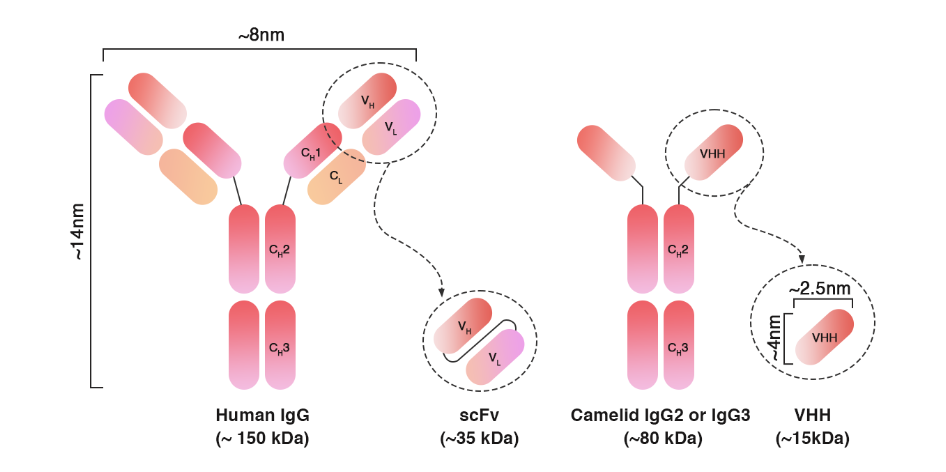
Fig.1. VHH antibody
VHH vs. scFv: Key Differences and Advantages
Using VHH as the CAR targeting domain instead of scFv is driven primarily by certain limitations of scFv in applications, which VHH can effectively address.
1. Lower Immunogenicity Risk
scFv requires an artificial linker between VH and VL; this non-natural sequence may be recognized by the host immune system, generating anti-drug antibodies that compromise CAR-T persistence and efficacy. In contrast, VHH is a naturally occurring single-domain structure without a linker, thus posing a lower immunogenicity risk. Moreover, VHH sequences share high homology (75–90%) with the human VH3 gene family, facilitating humanization and further reducing immunogenicity.
2. Avoidance of Aggregation, Enhanced Stability
The VH-VL interface of scFv often exposes hydrophobic residues, easily leading to molecular aggregation and affecting CAR expression and function. In VHH, the hydrophobic regions that would normally interact with VL have been evolutionarily replaced by hydrophilic amino acids (e.g., Phe37→Glu44), creating a hydrophilic interface and thus very low aggregation propensity. Additionally, VHH exhibits higher thermal stability, resistance to organic solvents, and tolerance across a broad pH range (pH 2–11), whereas conventional antibodies are only stable at pH 6–9.
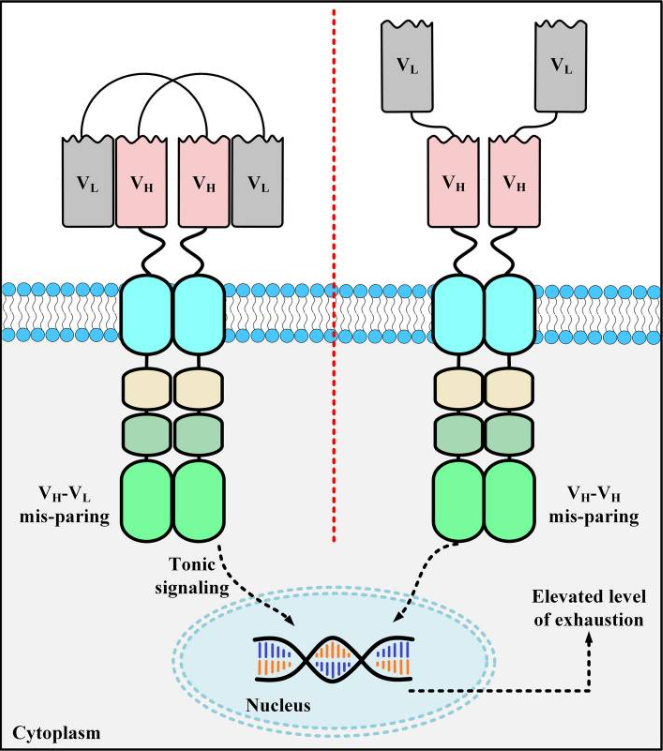
Fig.2. scFv aggregation on CAR-T cell surface (Biomark Res, 2022)
3. Recognition of Unique Epitopes
Due to the absence of a light chain, VHH has a longer CDR3 loop (16–18 amino acids) capable of penetrating deep into antigen clefts and recognizing epitopes inaccessible to conventional antibodies (e.g., enzyme active sites or hidden viral epitopes). This feature expands the targeting scope of CAR-T therapy.
4. Ease of Engineering
As a single domain, VHH is convenient for genetic manipulation, enabling straightforward construction of multivalent or multi-specific CARs. Multiple VHHs can be tandemly linked via short peptides to generate CAR-T cells that simultaneously recognize different antigens, addressing tumor heterogeneity and immune escape.
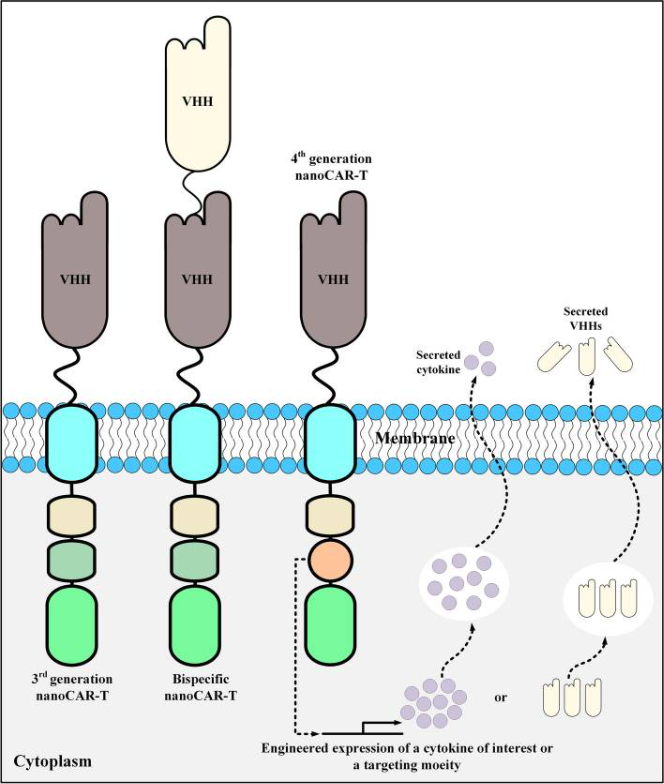
Fig.3. VHH-based CAR-T structural formats (Biomark Res, 2022)
Clinical Breakthroughs and Future Directions
VHH-based CAR-T therapy has achieved significant clinical progress. The most representative product is Legend Biotech's ciltacabtagene autoleucel (brand name: CARVYKTI), the first FDA-approved BCMA-targeted VHH CAR-T product featuring a bivalent nanobody design, for the treatment of relapsed/refractory multiple myeloma. The success of this product validates the feasibility and superiority of VHH as a CAR targeting domain.
Currently, in addition to CARVYKTI, multiple VHH/VNAR-based CAR-T candidates are in clinical development (Table 1). Although the field still faces common challenges such as the tumor microenvironment and antigen heterogeneity, the diverse pipeline offers possibilities for future breakthroughs.
Table 1. Clinical Progress of VHH-Based CAR-T Therapy (Biomark Res, 2025)
| Name | Target antigen | Clinical phase | Tumor type | Sponsor | Clinical trial registration number / Patent publication number | Limitations |
|---|---|---|---|---|---|---|
| LCAR-AIO | CD19 Molecule(CD19):CD20Antigen (CD20);CD22 Molecule (CD22) | Phase I clinical trial | Acute lymphocytic leukemia | Nanjing Duly Biotechnology Co., Ltd (Nanjing, China) | NCT06653556, NCT05318963, NCT05292898 | CAR-T cell activation may trigger CRS. |
| SC-DARIC33 | Sialic Acid-Binding Ig-Like Lectin 3(CD33) | Phase I clinical trial | Acute myeloid leukemia | Seattle Children's Research Institute | NCT05105152 | Bone marrow suppression and other side effects. Low CD33 expression in some AML patients may affect therapeutic efficacy. |
| anti-VEGFR-2 CAR T-cell therapy | Vascular Endothelial Growth Factor Receptor 2(VEGFR2) | Preclinical | Solid tumors | Helix BioPharma Corp | WO2018126317A1 | off-target toxicity; high expression of TGF-β and PD-L1, may restrict CAR-T cell infiltration and persistence. |
| anti-CEACAM6 CAR T-cell therapy | Cluster Of Differentiation 66c(CEACAM6) | Preclinical | Pancreatic tumor | National Research Council of Canada | WO2018014122A1 | off-target toxicity; CAR-T cell activation may trigger CRS |
As VHH CAR-T research deepens, how to accurately detect CAR positivity and monitor the dynamics of CAR-T cells in vivo has become critical for quality control and clinical studies. Traditional detection methods largely rely on recombinant proteins or anti-idiotypic antibodies, but for VHH CAR-T, a universal reagent that specifically recognizes the VHH domain is needed.
Universal Fluorescent-Labeled Anti-VHH Antibodies
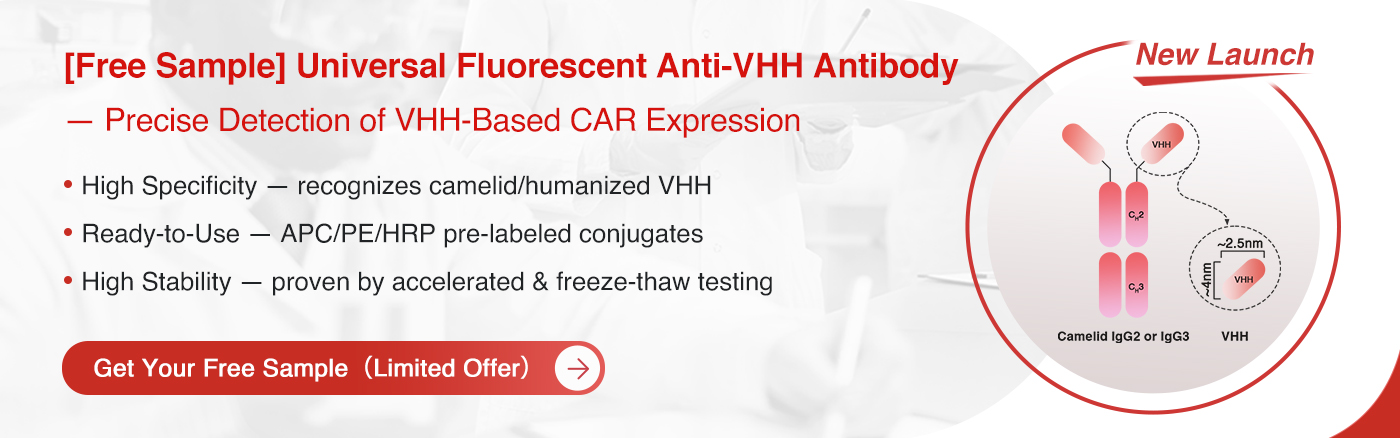
To meet the needs of VHH CAR-T research, ACROBiosystems proudly launches a series of universal fluorescent-labeled anti-VHH antibodies. These antibodies specifically recognize camelid and humanized VHH domains and are suitable for detecting VHH CAR-T positivity by flow cytometry, featuring:
- High Specificity: Specifically recognize the VHH domain with no nonspecific binding to human PBMCs.
- Universality: Specifically recognize camelid and humanized VHH antibodies, compatible with CAR positivity detection for CARs that use VHH as the antigen recognition domain.
- Ready-to-Use: Available in multiple direct-label formats—APC, PE, and HRP—saving experimental time.
- High Stability: Validated through accelerated stability testing and multiple freeze-thaw cycles.
This product series can be widely applied in early-stage R&D for VHH CAR-T positivity detection, CMC release testing, and quality control, providing standardized detection tools for VHH CAR-T development.
Validation Data
High Specificity: Specifically recognizes the VHH domain, no nonspecific binding to human PBMCs.
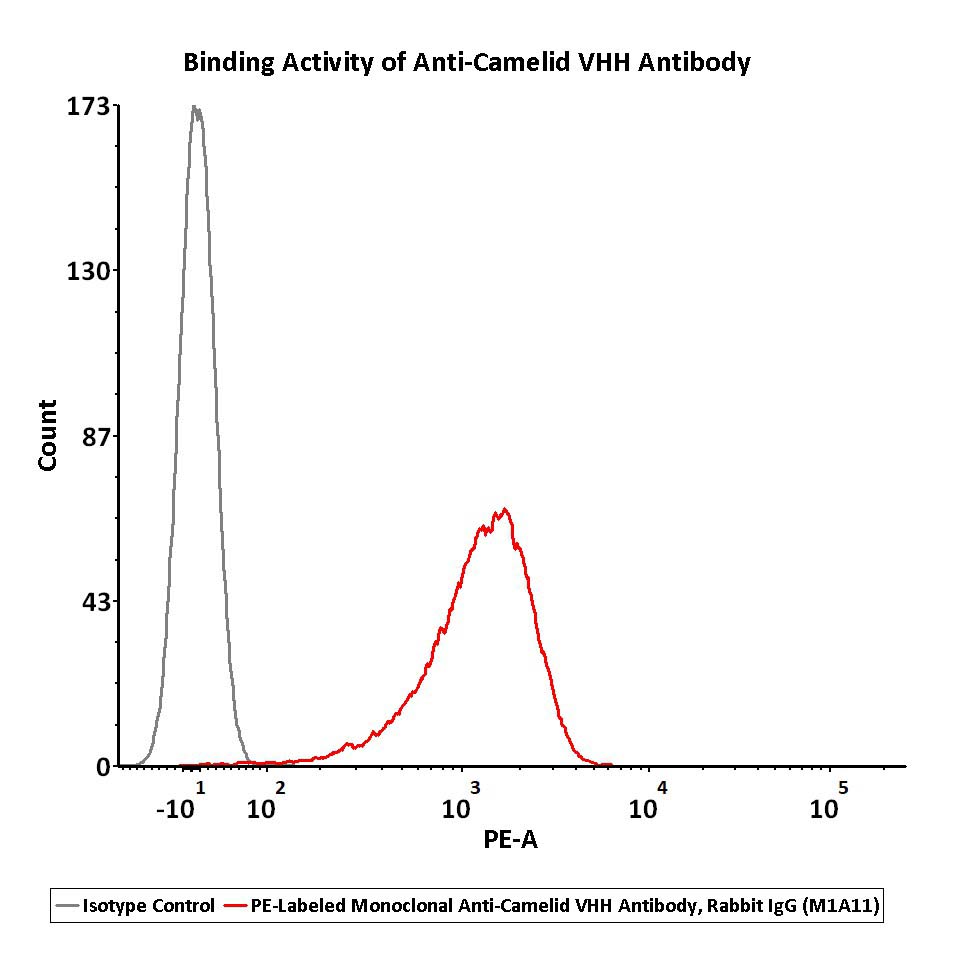
Flow cytometric analysis of VHH CAR-293 cells staining with PE-Labeled Monoclonal Anti-Camelid VHH Antibody, Rabbit IgG (M1A11) (Cat. No. CAH-PMY2491a) at 1:50 dilution (2 μL of the antibody stock solution corresponds to labeling of 1e6 cells in a final volume of 100 µL), compared with isotype control antibody. PE signal was used to evaluate the binding activity (QC tested).
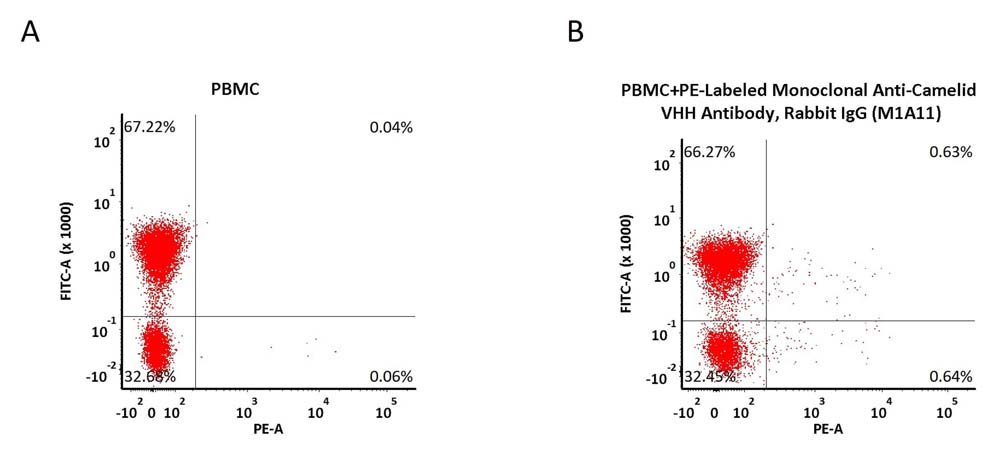
Non-specificity of PE-Labeled Monoclonal Anti-Camelid VHH Antibody, Rabbit IgG (M1A11) (Cat. No. CAH-PMY2491a) binding to CD3+cells present in human PBMC. 5e5 of human PBMCs were simultaneously stained with FITC-labeled anti-CD3 antibody and PE-Labeled Monoclonal Anti-Camelid VHH Antibody (2 μL of the antibody stock solution corresponds to labeling of 5e5 cells in a final volume of 100 µL) and washed and then analyzed with FACS. Both FITC and PE positive signals was used to evaluate the non-specific binding activity to human CD3+ cells (QC tested).
Product List

The initial trial quota is limited—click the image below to fill in your application details and get early access!
Related Product Recommendations
FAQ
Q1: What is VHH CAR-T therapy?
A: VHH CAR-T therapy uses a single-domain antibody (VHH or nanobody) as the antigen-recognition domain of the chimeric antigen receptor. Compared with traditional scFv-based CARs, VHH-based CARs offer improved stability, reduced propensity for CAR aggregation on the cell surface, lower immunogenicity risk, and greater flexibility for multi-target engineering.
Q2: Why are nanobodies increasingly used in next-generation CAR-T therapies?
A: Nanobodies enable the development of compact, multivalent, and multi-antigen CAR constructs that can better address tumor heterogeneity and antigen escape. Their favorable biophysical properties make them attractive components for next-generation engineered cell therapies.
Q3: How is VHH CAR-T positivity detected?
A: VHH CAR-T positivity is commonly analyzed using flow cytometry with antibodies that specifically recognize the VHH domain. Universal anti-VHH antibodies can be used to detect CAR expression across multiple VHH-based CAR constructs, supporting research, manufacturing, and quality control workflows.
References
Safarzadeh Kozani P, Naseri A, Mirarefin SMJ, et al. Nanobody-based CAR-T cells for cancer immunotherapy. Biomark Res. 2022;10(1):24. Published 2022 Apr 25. doi:10.1186/s40364-022-00371-7
Guo S, Xi X. Nanobody-enhanced chimeric antigen receptor T-cell therapy: overcoming barriers in solid tumors with VHH and VNAR-based constructs. Biomark Res. 2025;13(1):41. Published 2025 Mar 11. doi:10.1186/s40364-025-00755-5
Bao C, Gao Q, Li LL, et al. The Application of Nanobody in CAR-T Therapy. Biomolecules. 2021;11(2):238. Published 2021 Feb 8. doi:10.3390/biom11020238
 Popular ArticlesRelated RecommendationsPopular Events
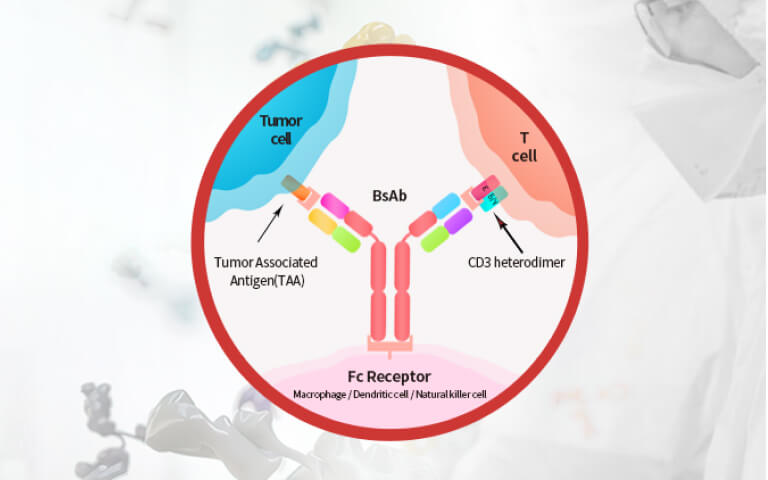 AI-Assisted Bispecific Antibody Development: From Target Pairing Prediction to Experimental Validation2026-07-31Page Views:52
 The Brain's Fountain of Youth: How Modern Neuroscience Is Decoding Healthy Brain Aging2026-07-31Page Views:22
 In Vivo CAR-T Therapy: Next-Generation CAR-T Cell Engineering and Gene Delivery Advances2026-07-29Page Views:48
 A Comprehensive Guide to Sterility Testing in Biopharmaceutical Manufacturing: From Compendial Methods to qPCR-Based Rapid Testing2026-07-27Page Views:69
 Biomarkers: Enabling Precision Assessment of Cardio-Kidney-Metabolic (CKM) Syndrome2026-07-24Page Views:97




 Related Products