



IL-6 Family Signaling Pathway
Background
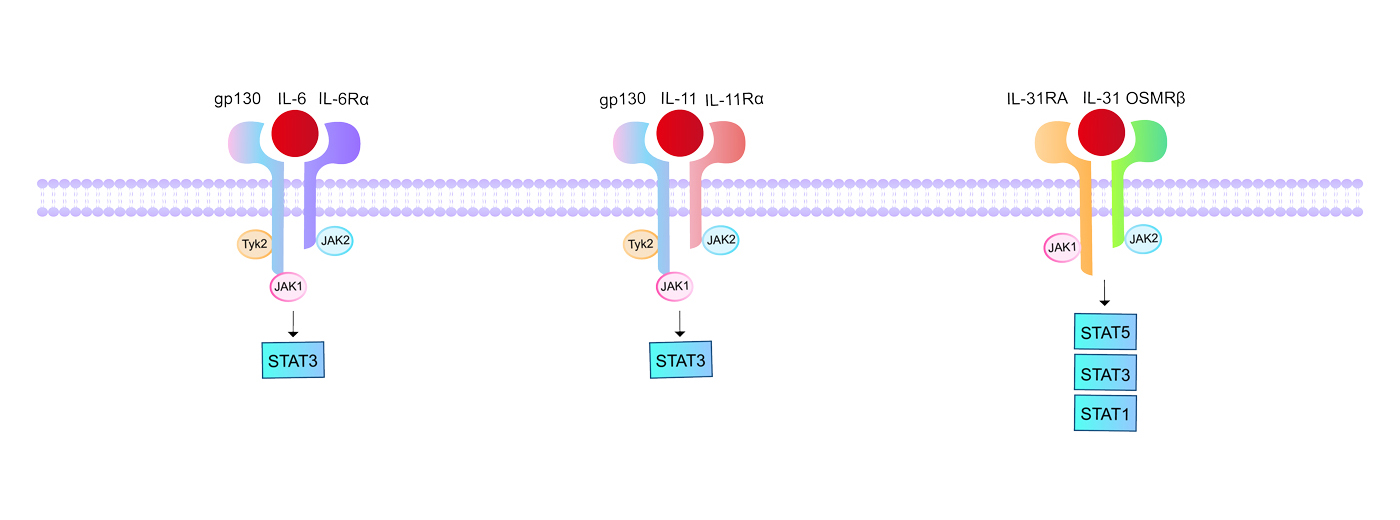
The interleukin-6 (IL-6) family occupies a central role in the pathogenesis and treatment of autoimmune diseases. This family includes IL-6, IL-11, IL-31, and other members, whose signaling generally depends on the gp130 receptor subunit. Under physiological conditions, IL-6 family cytokines regulate critical processes such as the hepatic acute-phase response, B-cell activation, and maintenance of immune homeostasis. However, in autoimmune diseases, their overactivation drives chronic inflammation and tissue damage.
Targeting the IL-6 pathway has emerged as a key therapeutic strategy in autoimmune disorders. Tocilizumab, an anti-IL-6 receptor monoclonal antibody, effectively inhibits IL-6 signaling, suppressing inflammation and tissue injury. It has been approved in over 100 countries for the treatment of rheumatoid arthritis, juvenile idiopathic arthritis, and multiple other autoimmune conditions. IL-11 has been implicated in intestinal inflammation, psoriasis, and arthritis, offering new avenues for more precise therapeutic approaches. Meanwhile, inhibitors of IL-31 signaling also show therapeutic promise; for example, nemolizumab has demonstrated significant efficacy in alleviating pruritus and skin lesions in patients with atopic dermatitis, providing a novel treatment option for this disease.
In summary, the IL-6 family exerts a pivotal influence on autoimmune disease through its complex biological functions. Therapeutic targeting of this family not only underscores its pathological importance but also provides patients with effective treatment options and demonstrates substantial clinical potential.
- IL-6 Family Signaling Pathway