Anti-G4S Linker Antibody for CAR-T Detection: Mechanism and Applications
 Publication Date:2026-06-22
 Page Views:237
Why Does CAR-T Detection Need a "Universal" Solution?
In flow cytometry-based CAR-T detection, recombinant antigen-based approaches (e.g., CD19 or BCMA) are widely used due to their direct target-recognition capability. At the same time, the industry has developed a variety of alternative technologies, each with its own distinctive features.
Protein L is easy to handle, cost-effective, and shows high affinity for specific κ light chain subtypes, delivering rapid results in applicable scenarios. Its limitation, however, lies in its recognition of only scFvs containing Vκ light chains, restricting its utility to CAR constructs of particular subtypes.
Anti-Fab antibodies recognize epitopes within the Fab region and can bind to scFvs that contain Fab-derived sequences, enabling CAR detection. They offer certain universality and can detect CARs targeting different antigens. However, they suffer from high background signals, and commercial products vary considerably in quality—most are polyclonal antibodies with poor batch-to-batch consistency, which poses challenges for reliable quantification.
Anti-idiotype antibodies stand out with exceptional specificity and sensitivity, particularly excelling in clinical monitoring of specific CAR products. However, their development requires custom engineering for each CAR's scFv, involving long timelines and complex processes, and they are only applicable to the corresponding single construct—offering limited universality.
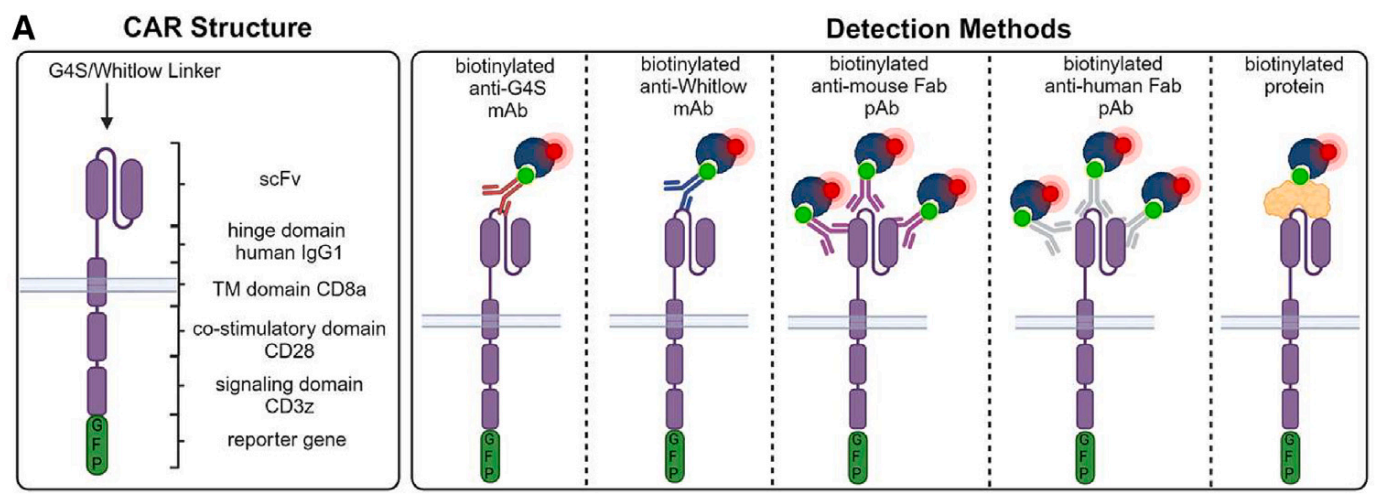
Fig.1. Different CAR detection technologies (Schindler et al. 2024)
Faced with an increasingly diverse CAR-T pipeline, each of the above methods has its strengths but also its own application boundaries. The industry holds high expectations for a detection tool that combines universality, high sensitivity, and ease of development—precisely the space where linker-targeted universal detection strategies can shine.
Mechanism Unveiled: Why Does the G4S Linker Serve as a Universal Detection Target?
The G4S Linker, composed of repeating glycine (G) and serine (S) sequences — (GGGGS)ₙ — is one of the most commonly used linker peptides in CAR constructs, alongside the Whitlow/218 linker in scFv design. It typically appears between the VH and VL domains of the scFv and between tandem domains in some dual-target CARs.
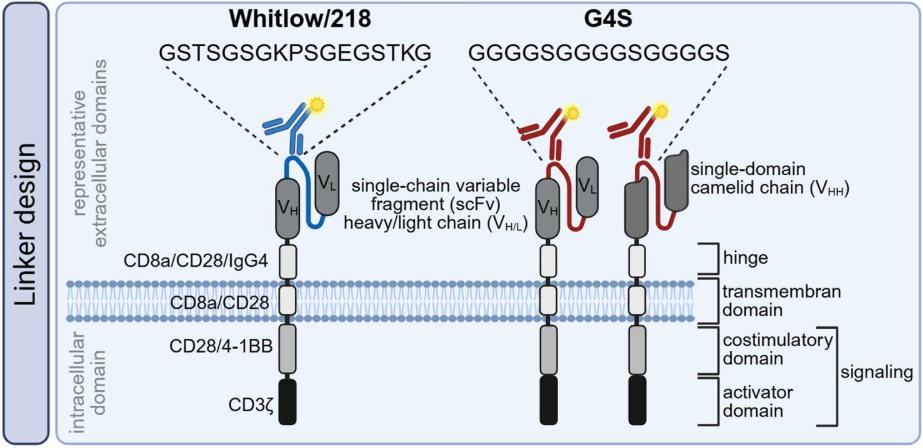
Fig.2. Anti-Linker antibody (Schwingen et al, 2026)
The G4S Linker is highly flexible and hydrophilic. After proper folding of the CAR protein, it is exposed on the extracellular surface and located away from the antigen-binding site. This endows it with unique advantages as a detection epitope:
High universality — In CAR constructs that employ the standard G4S (GGGGS) repeat sequence, the linker sequence is highly consistent and can serve as a universal detection epitope, enabling detection across a broad range of CARs regardless of target specificity or scFv origin.
No interference with antigen recognition — Since the G4S Linker is positioned between the VH and VL domains of the scFv or between tandem domains, and is located away from the antigen-binding site, antibody binding to this region has been shown in most cases not to directly mask the interaction between the scFv and tumor antigens; to date, no significant functional interference has been reported in the vast majority of validated CAR designs.
High specificity — The G4S linker sequence is absent from native cell-surface proteins, allowing Anti-G4S antibodies to selectively recognize CAR-expressing cells with minimal background staining and high signal-to-noise performance.
As a monoclonal antibody targeting a conserved epitope, it also offers superior lot-to-lot reproducibility compared to polyclonal alternatives. Based on these features, the Anti-G4S Linker antibody has emerged as a key reagent bridging research flexibility and industrial standardization.
From R&D to QC: Full-Process Applications of Anti-G4S Linker Antibody
The Anti-G4S Linker antibody has demonstrated its unique value as a universal detection tool across multiple stages of CAR-T cell research and manufacturing. In in vitro analysis, fluorescently labeled Anti-G4S antibodies enable direct flow cytometric detection of CAR expression on live cells with low background signals, providing a convenient approach for monitoring CAR-positive cell populations during research and process development. In in vivo studies, when combined with T-cell subset markers, the antibody stably tracks CAR-T cell expansion, homing, and differentiation after infusion. During process development, Anti-G4S antibodies conjugated to magnetic beads can support the enrichment of CAR-positive cells, facilitating the preparation of high-purity cell products while avoiding the use of target antigen reagents. Extending to industrial quality control and release testing, the antibody—with its excellent batch-to-batch consistency and method transferability—is increasingly being incorporated into QC workflows by industrial users as a key reagent for identity and purity assessment, truly covering the full detection cycle from early R&D to GMP production.
ACROBiosystems Anti-G4S Linker Antibody: Engineered for Superior Detection
As CAR-T cell therapies transition from laboratory to industrialization, a detection reagent that combines universality, sensitivity, and compliance quality has become a shared expectation among researchers and QC teams alike. ACROBiosystems' Anti-G4S Linker Rabbit Monoclonal Antibody has undergone multiple rounds of application validation and continues to serve global CAR-T R&D and manufacturing frontlines—targeting the linker, addressing CAR detection challenges across multiple targets, configurations, and scenarios with a single antibody, so your detection system is no longer constrained by reagent choices.
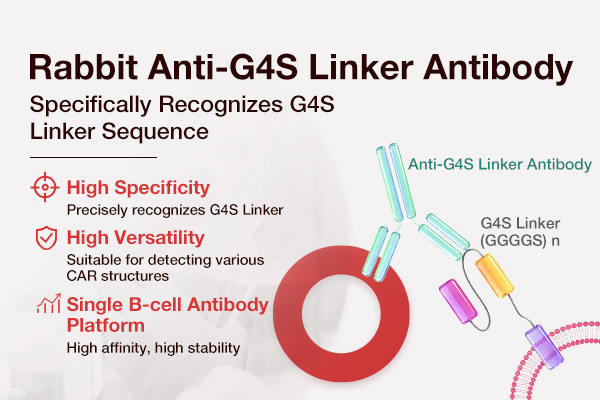
- High affinity: Rabbit monoclonal antibody developed on a single B-cell antibody platform.
- High specificity: No nonspecific binding to peripheral blood mononuclear cells (PBMCs).
- Species and subtype universal: Not restricted by scFv subtype or species origin, compatible with various single-chain antibodies.
- Universal for in vivo and in vitro: Unaffected by antigen blocking or serum, suitable for both in vivo and in vitro environments.
- PG (Pre-GMP) grade: Suitable for CAR cell activation, sorting, and enrichment.
Product List
| Cat. No. | Product Description |
|---|---|
| G4S-AFMY25 | APC-Labeled Monoclonal Anti-G4S linker Antibody, Rabbit IgG (016) (0.03% Proclin) |
| G4S-BLM25A1 | Biotinylated Monoclonal Anti-G4S linker Antibody, Rabbit IgG (016), CF (carrier free), premium grade |
| G4S-BLM25G0 | Biotinylated Monoclonal Anti-G4S linker Antibody, Rabbit IgG (016), premium grade |
| G4S-PFMY25 | PE-Labeled Monoclonal Anti-G4S linker Antibody, Rabbit IgG (016) (0.03% Proclin) |
| GMP-MG4S25 | GMP Biotinylated Monoclonal Anti-G4S linker Antibody, Rabbit IgG (016), CF (carrier free) |
| G4S-ABFYP1 | Alexa Fluor™ 647-Labeled Monoclonal Anti-G4S linker Antibody, Rabbit IgG (016) (0.03% Proclin) |
| G4S-AEFYP1 | Alexa Fluor™ 555-Labeled Monoclonal Anti-G4S linker Antibody, Rabbit IgG (016) (0.03% Proclin) |
| G4S-AFYP1 | Alexa Fluor™ 488-Labeled Monoclonal Anti-G4S linker Antibody, Rabbit IgG (016) (0.03% Proclin) |
| G4S-CFM25G0 | PE-Labeled Monoclonal Anti-G4S linker Antibody, Rabbit IgG (016), premium grade |
| G4S-CY25P1 | Monoclonal Anti-G4S linker Antibody, Rabbit IgG (016), CF (carrier free), premium grade |
Related Recommendations:
- Anti-218 Linker Antibodies
- 80+ CAR Target Proteins
- Protein L
- Anti-VHH Antibodies
- GENIUS™ Nuclease
FAQ
Q1: What is a G4S linker in CAR-T cell therapy?
A: The G4S linker is a flexible peptide sequence composed of repeating glycine-serine units (GGGGS). It is commonly used in CAR constructs to connect antibody domains while maintaining proper folding and antigen-binding activity. Because of its widespread use, the G4S linker serves as an attractive target for universal CAR-T detection.
Q2: Why are Anti-G4S Linker antibodies considered universal CAR-T detection reagents?
A: Anti-G4S Linker antibodies recognize the conserved G4S peptide sequence rather than the CAR target antigen itself. This allows a single antibody to detect multiple CAR constructs that contain the G4S linker, regardless of target specificity or scFv origin, making them versatile tools for CAR-T research.
Q3: What are the advantages of Anti-G4S Linker antibodies compared with Protein L or anti-idiotype antibodies?
A: Compared with Protein L, Anti-G4S antibodies are not restricted to specific light-chain subtypes. Compared with anti-idiotype antibodies, they do not require custom development for each CAR construct. As a result, they offer broader applicability, lower development complexity, and improved scalability for universal CAR detection.
Q4: Can Anti-G4S Linker antibodies be used in CAR-T manufacturing and quality control?
A: Yes. Anti-G4S Linker antibodies are used for CAR expression detection, cell enrichment, process development, identity testing, and quality control. Their consistent performance and compatibility with multiple CAR designs make them valuable tools throughout the CAR-T development and manufacturing workflow.
 Popular ArticlesRelated RecommendationsPopular Events
 A Comprehensive Guide to Sterility Testing in Biopharmaceutical Manufacturing: From Compendial Methods to qPCR-Based Rapid Testing2026-07-27Page Views:49
 Biomarkers: Enabling Precision Assessment of Cardio-Kidney-Metabolic (CKM) Syndrome2026-07-24Page Views:76
 Converging at BIO, ACROBiosystems Connects Emerging Innovation Assets with Global Strategic Opportunities2026-07-24Page Views:76
 Payload-Specific ELISA Kits for Intact ADC Quantification in Preclinical PK Studies2026-07-22Page Views:83
 Expanding the Potential of Hematopoietic Stem Cells (HSCs): Emerging Strategies for HSCs Expansion and Clinical Manufacturing2026-07-22Page Views:74




![[Free Sample] Universal Fluorescent Anti-VHH Antibody — Precise Detection of VHH-Based CAR Expression](https://console.acrobiosystems.com/uploads/demo/2026/06/02/Anti-VHHAntibodySmallbanner.jpg)
 Related Products