



 Nov 20, 2026
 Page Views:24


On September 30, 2026, Phrontline Biopharma announced that the first patient had been dosed in a global Phase I/II study of TJ102, a bispecific, dual-payload antibody–drug conjugate (ADC) targeting FRα and CDH6. TJ102 uses a DLP1 branched linker to carry a topoisomerase I inhibitor and a microtubule inhibitor in a 4+4 configuration, giving a total drug-to-antibody ratio (DAR) of 8.[1]
For bioanalytical teams, the milestone raises a practical question: when an ADC carries two payloads, which molecular species should a pharmacokinetic (PK) strategy measure?
In May 2026, Astellas researchers published a review of the clinical pharmacology and translational challenges associated with dual-payload ADCs.[2] Read alongside the updated AAPS recommendations published in July,[3] the review points to a central principle: the goal is not simply to measure more analytes, but to establish which species each assay detects and what the resulting measurements actually mean.
Dual‑Payload PK Starts With Analyte Selection
A conventional single-payload ADC PK panel commonly includes measurements of total antibody, conjugated antibody, conjugated payload, and free payload. A dual-payload design introduces additional conjugated and free payload species, together with related metabolites, and can generate ADC populations with distinct payload combinations and DAR distributions.
Measuring every possible payload/DAR combination individually would be impractical and is not necessarily informative. Ravenstijn et al. instead prioritize several broad groups for PK analysis: antibodies retaining both payloads, antibodies retaining only one payload, fully deconjugated antibodies, and free payloads.[2]
The appropriate panel depends on how the molecule behaves in circulation. In the relatively simple case described in the review, population PK analysis may support dose recommendations in patients with mild organ impairment when the dual-payload ADC remains stable, no single-payload conjugated antibodies are formed, and systemic exposure to both free payloads is low. The same approach may be suitable for patients with moderate impairment if the affected organ is not involved in clearing either payload. If the two payloads are lost at different rates or exhibit distinct exposure profiles, additional molecular species may need to be considered.
The objective is therefore to build an analyte panel around the expected species and the decisions the data will inform, rather than automatically doubling a single-payload assay panel. This also raises a critical question of interpretation: if one assay detects payload A and another detects payload B, do the results demonstrate that both payloads remain attached to the same antibody?
Detecting Both Payloads Does Not Confirm an Intact Dual‑Payload ADC
Updated recommendations from the AAPS ADC Bioanalytical Working Group, published in July 2026, address ADC analyte quantification, DAR assessment, sample stability, and method validation.[3] No single platform covers every relevant species. Total antibody can be quantified by ligand-binding assay (LBA) or hybrid LC-MS; conjugated antibody can be measured using payload-directed immunoassays or immunocapture coupled with mass spectrometry; and free payloads and their metabolites are commonly analyzed by LC-MS/MS.
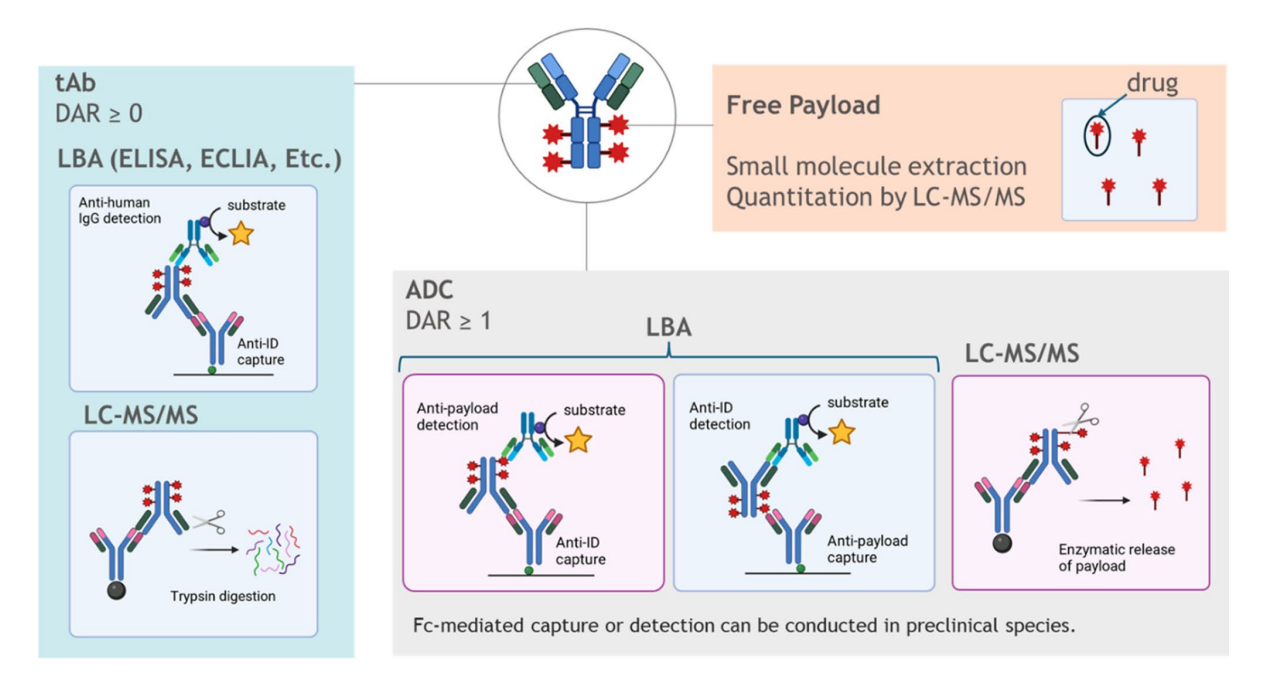
Figure 1. Representative LBA and LC-MS/MS formats for total antibody, ADC, and free-payload measurements. The choice of assay format depends on the analyte and the question the measurement is intended to answer.
The key interpretive challenge is whether an assay can distinguish among conjugation states. An immunoassay directed against payload A may detect both A+B and A-only ADC species. Even when separate assays quantify antibodies carrying payload A and payload B, the results do not establish that both payloads are attached to the same antibody molecule. This distinction matters when interpreting exposure to the intact dual-payload ADC relative to partially deconjugated species generated by selective payload loss.
DAR Sensitivity Depends on the Assay Format
The AAPS recommendations distinguish between a conjugated antibody assay and a conjugated payload assay. The former quantifies antibody molecules that remain conjugated and generally does not directly report changes in DAR. The latter measures the amount of conjugated payload and may therefore be DAR-sensitive.[3]
Payload specificity alone does not guarantee an equivalent response across DAR species. Response can be influenced by payload copy number, steric hindrance, epitope accessibility, and the way a clone recognizes the linker–payload structure. Although these issues also arise with single-payload ADCs, the additional payload combinations in dual-payload molecules make it especially important to define which species a method detects and whether responses are comparable across DAR species.
Sample Stability Can Shift More Than One Readout
Ex vivo payload loss can lead to underestimation of conjugated payload and overestimation of free payload. The effect on a conjugated-antibody readout depends on whether the assay still recognizes the molecule after payload loss.
Accordingly, the AAPS recommendations emphasize payload-specific stability assessment and lifecycle management of critical reagents. Cross-validation is also important when results are generated with different technologies or methods are transferred between laboratories, to establish whether the data are comparable.[3]
Reagent Selection Shapes Assay Interpretation
Reagent selection is therefore an assay-design decision, not simply a procurement step. Anti-payload clones can differ in how they bind free payload, linker–payload structures, and conjugated antibodies. Specificity, cross-reactivity, and assay response should be evaluated with the intended ADC in the planned assay format.
ACROBiosystems offers anti-payload and anti-idiotypic antibodies, custom antibody development services, and intact ADC quantification ELISA kits. These reagents and kits support clone screening, drug-specific detection, and PK assay development.
Anti-Payload Antibodies and Screening Panels
ACROBiosystems offers antibodies against MMAE, MMAF, Exatecan, and related payload structures, together with antibody screening panels for selected payloads, providing reagent options for clone screening and assay development across different ADCs.
The Anti-MMAE Antibody Screening Panel (APA-01) contains four rabbit monoclonal antibodies that differ slightly in their epitope recognition. The panel recognizes MMAE but not MMAF. Detection data are available for all four clones in an ELISA using disitamab vedotin (RC48) as the model ADC in 100% human serum.
M1D12 (Cat. No. MME-MY2211) and M1H05 (Cat. No. MME-MY2198A) are presented below as representative examples to guide anti-payload antibody screening. In the bridging ELISA shown, these clones served as capture antibodies, with biotinylated HER2 protein (Cat. No. HE2-H82E2) as the detection reagent.
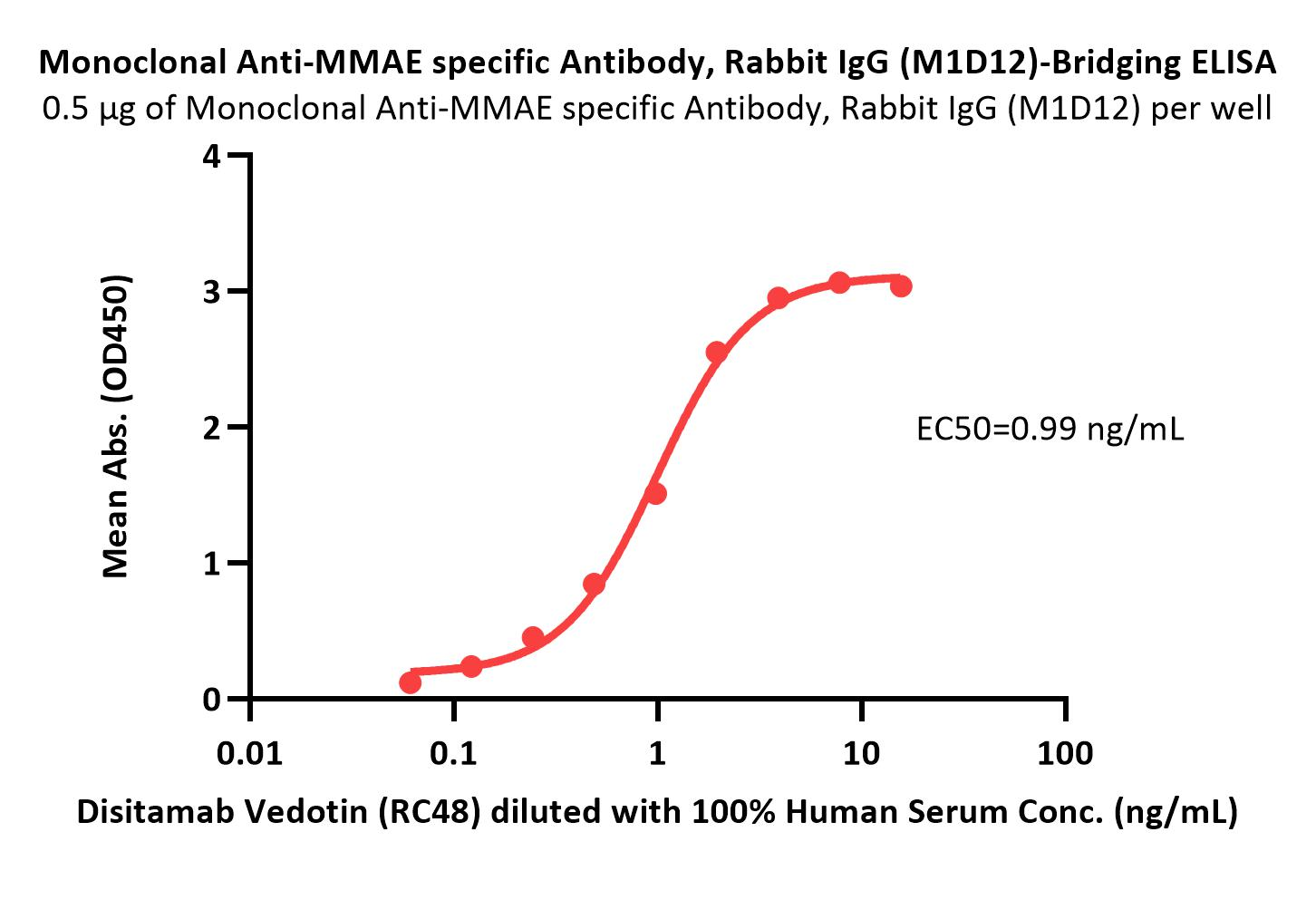
Figure 2. RC48 bridging ELISA using M1D12 (0.5 μg/well) as the capture antibody in 100% human serum; EC50 = 0.99 ng/mL.
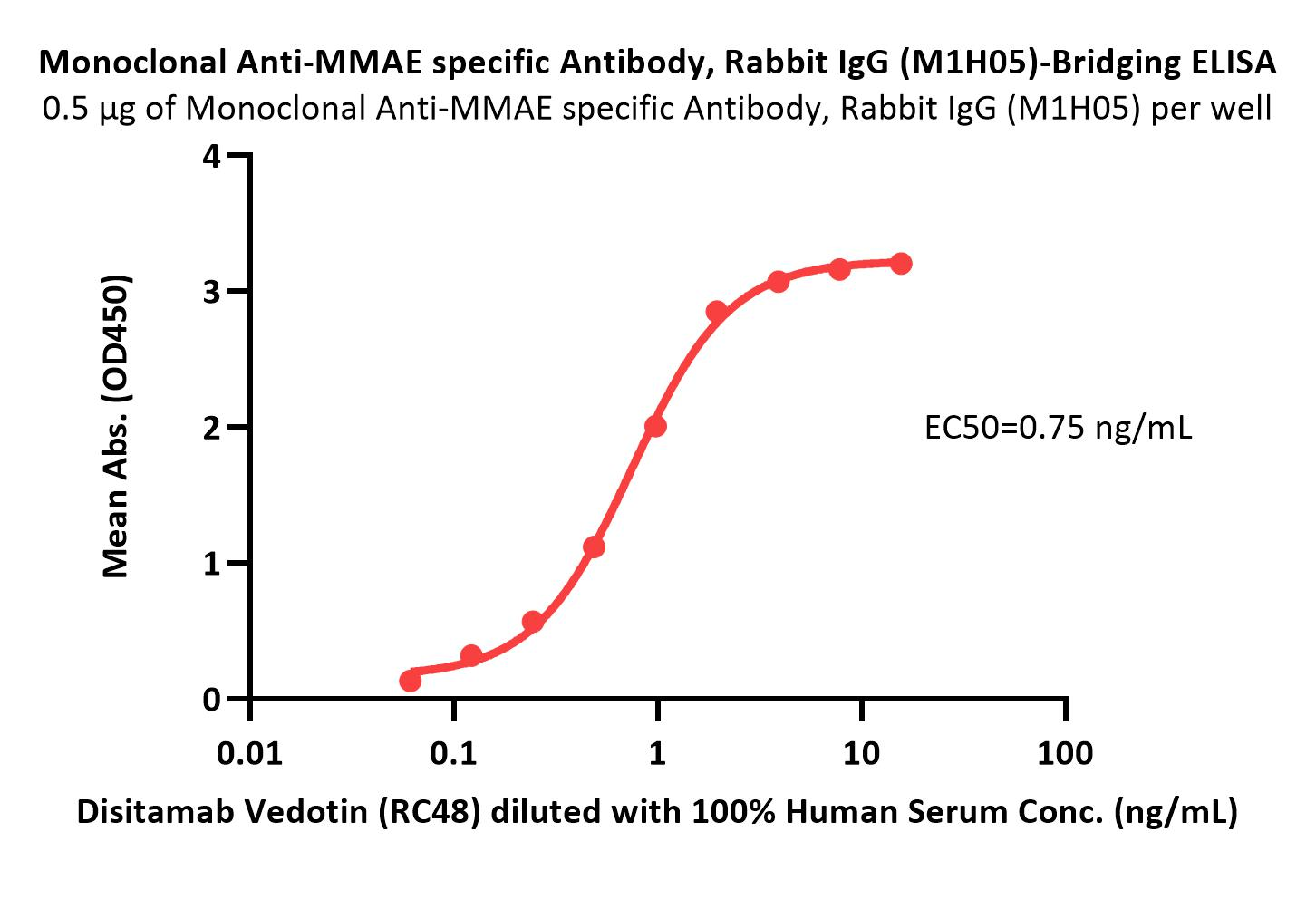
Figure 3. RC48 bridging ELISA using M1H05 (0.5 μg/well) as the capture antibody in 100% human serum; EC50 = 0.75 ng/mL.
Intact ADC Quantification ELISA Kits
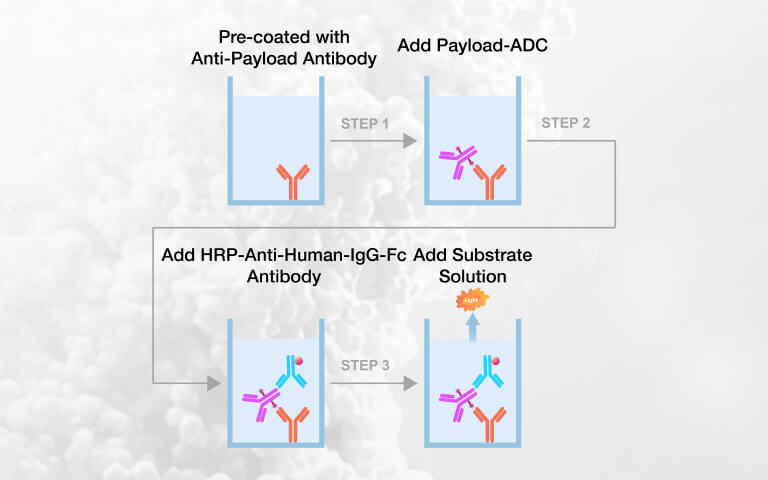
For laboratories seeking a ready-to-use quantitative format, ACROBiosystems offers ELISA kits for MMAE-, MMAF-, and Exatecan-conjugated ADCs. The kits have been validated in cynomolgus monkey serum and plasma to support preclinical quantification of ADCs carrying the specified payload.
| Performance parameter | PKA-A001 | PKA-A002 | PKA-A003 |
|---|---|---|---|
| Standard curve R² | >0.999 | >0.999 | >0.999 |
| Intra-assay CV | <6% | <6% | <6% |
| Inter-assay CV | <6% | <6% | <7% |
| Mean recovery | 95%–105% | 94%–106% | 95%–104% |
| Reported cross-reactivity | <2% (with MMAE) | <2% (with MMAF) | <2% (with Exatecan) |
| Total assay time | 2.5 h | 2.5 h | 2.5 h |
Explore ACROBiosystems' ADC Pharmacokinetic Analysis Solutions to review available reagents, kits, and application data for your assay development workflow.
 to Clinical Success.jpg)