


 Nov 17, 2026
 Page Views:46


In 2003, the LFA-3–Fc fusion protein alefacept became the first FDA-approved biologic for psoriasis — and its target was CD2. After its manufacturer withdrew the drug in 2011, CD2 slipped out of the drug-development mainstream.
Two decades later, CD2 is attracting renewed attention: CD2-directed CAR-T cells have shown antitumor activity in T-cell malignancies; a CD2-costimulatory bispecific reported in mAbs (June 2026) addresses two major constraints in solid-tumor T-cell engager research; and an anti-CD2 antibody has advanced to Phase IIb in transplantation. Why is this long-studied target returning to the immunotherapy agenda? This article examines the underlying biology and the therapeutic settings in which the CD2–CD58 axis may matter.
1. Discovery in the 1980s: immunology's first defined adhesion pair
CD2 was characterized earlier than most of today's prominent targets. In the early 1980s, monoclonal-antibody blocking of cytotoxic T-cell killing identified LFA-1, LFA-2 (CD2) and LFA-3 (CD58); by 1986–87, CD2 and CD58 were confirmed as a receptor–ligand pair — the first clearly defined heterophilic cell-adhesion system in immunology [1] .
CD2 is an immunoglobulin-superfamily transmembrane glycoprotein expressed on nearly all mature T cells, thymocytes and NK cells, with higher levels on activated effector and memory T cells; CD58 is broadly distributed on antigen-presenting cells (APCs) and tissue cells. A critical species caveat: mice lack CD58, and mouse CD2 binds CD48 instead. The CD2–CD58 pathway is therefore not reproduced in standard mouse models [1-3].
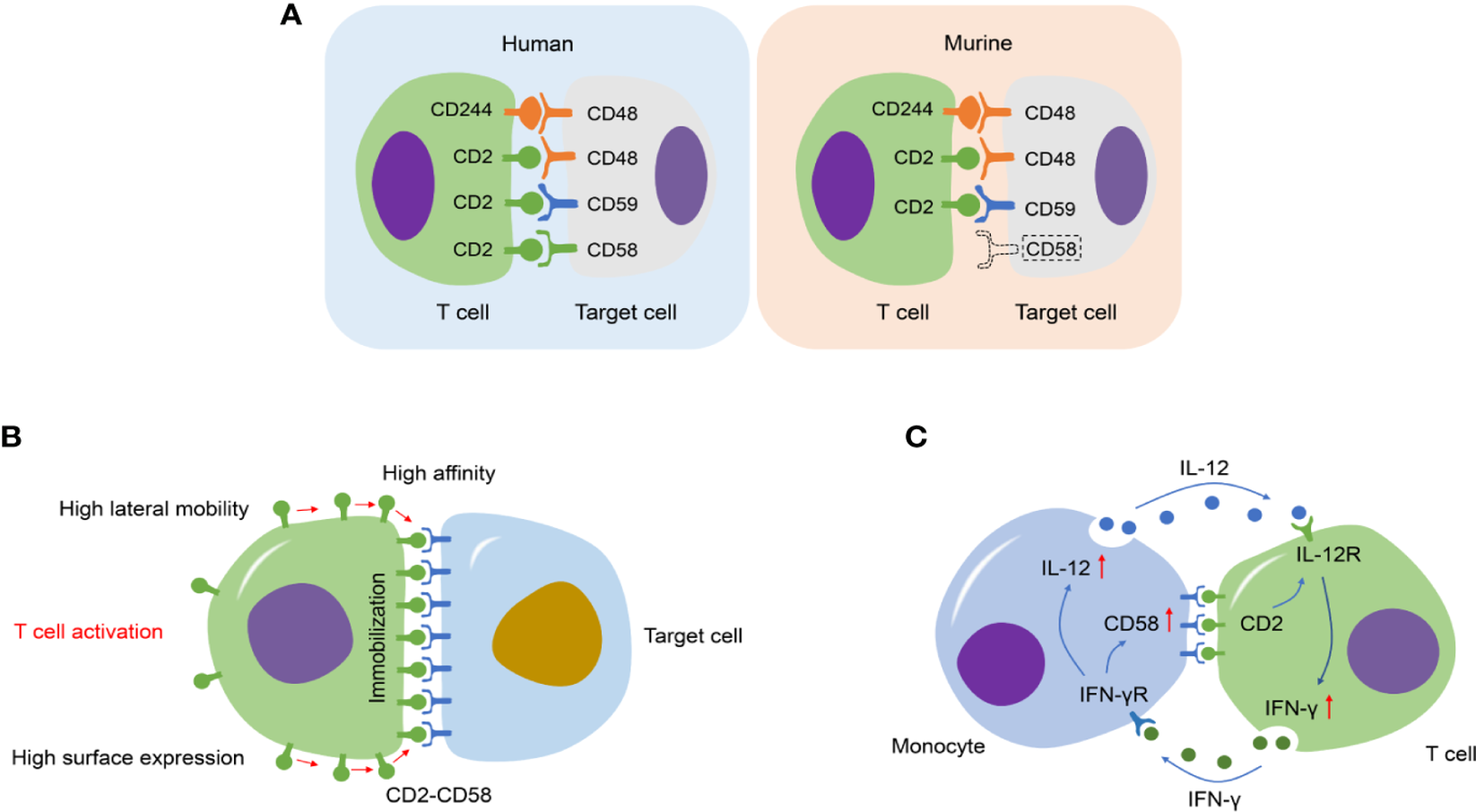
The CD2 ligand system across species: CD2–CD58 is the principal adhesion pair in humans, while mice lack CD58 and CD2 binds CD48 instead [2]
2. The “second signal” at the immunological synapse: more than adhesion
T-cell activation requires two signals: TCR recognition of MHC–peptide provides Signal 1, and costimulatory receptors provide Signal 2 — most commonly attributed to CD28. The CD2–CD58 axis is another route to costimulation that also stabilizes cell–cell contact.
When a T cell contacts a target cell, a hierarchically organized “immunological synapse” assembles at the interface. CD2–CD58 accumulates at its outer edge into a ring-shaped “corolla” structure, where signaling is amplified more strongly than at the synapse center — enhancing the TCR pathway (p-SFK/LAT/PLC-γ), calcium influx and IL-2 production; PD-1 recruitment to the corolla, by contrast, weakens this amplification [2].
The pathway becomes especially relevant when CD28 is absent. CD28-negative CD8⁺ T cells — abundant in the solid-tumor microenvironment, during chronic infections, and in elderly patients — cannot use the CD28–B7 pathway, making CD2–CD58 an alternative source of costimulation [12].
In short, CD2–CD58 provides both the stable cell–cell adhesion that helps maintain the synapse and the signal amplification that reinforces T-cell activation.
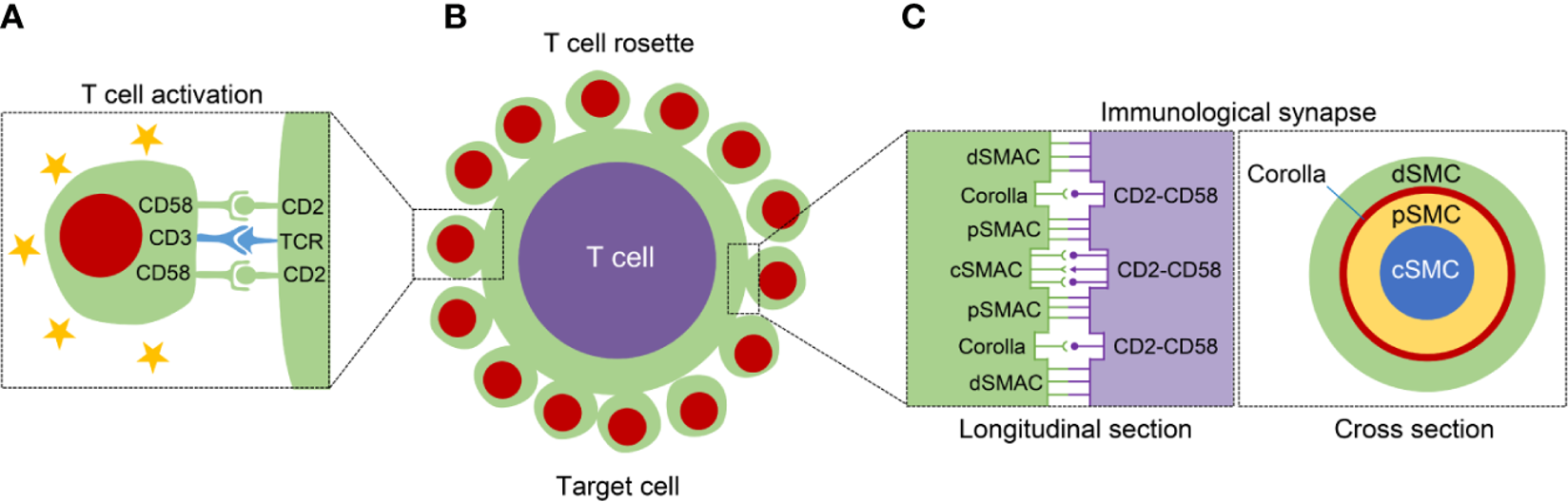
SMAC compartments of the immunological synapse and the CD2–CD58 “corolla” structure [2].
3. When CD58 is lost: a shared vulnerability in cancer and autoimmune disease
When a tumor cell loses CD58, the CD2–CD58 contact at the synapse is broken: the T cell loses both stable adhesion to its target and the costimulation required for full activation — even when its TCR recognizes the tumor antigen, its ability to kill the target can decline.
This is well documented in the clinic. In diffuse large B-cell lymphoma (DLBCL), roughly one quarter of cases carry CD58 mutations or loss of expression, linked to poorer outcomes after CD19 CAR-T therapy [4], and loss of tumor CD58 directly impairs CAR-T function [5]. In 17 CD19 CAR-T–treated DLBCL patients, median overall survival was 26.2 months in the highest-CD58 group versus just 7.9 months in the lowest-CD58 group, and relapsed lesions showed broadly downregulated CD58 [6].
A 2023 melanoma study revealed the underlying mechanism: CD58 and PD-L1 compete for the same “stabilizing protein,” CMTM6. CD58 loss simultaneously weakens T-cell activation and infiltration and raises PD-L1 levels. In the same study, tumor CD58 status was associated with checkpoint-inhibitor response [7].
Autoimmunity shows the other side of the coin: the CD58 locus is one of the strongest non-HLA risk loci for multiple sclerosis (MS), and risk-allele carriers show lower CD58 mRNA [8]. Loss of CD58 can help tumors evade T-cell attack, while genetic findings in multiple sclerosis suggest that the same pathway may also help maintain immune tolerance.
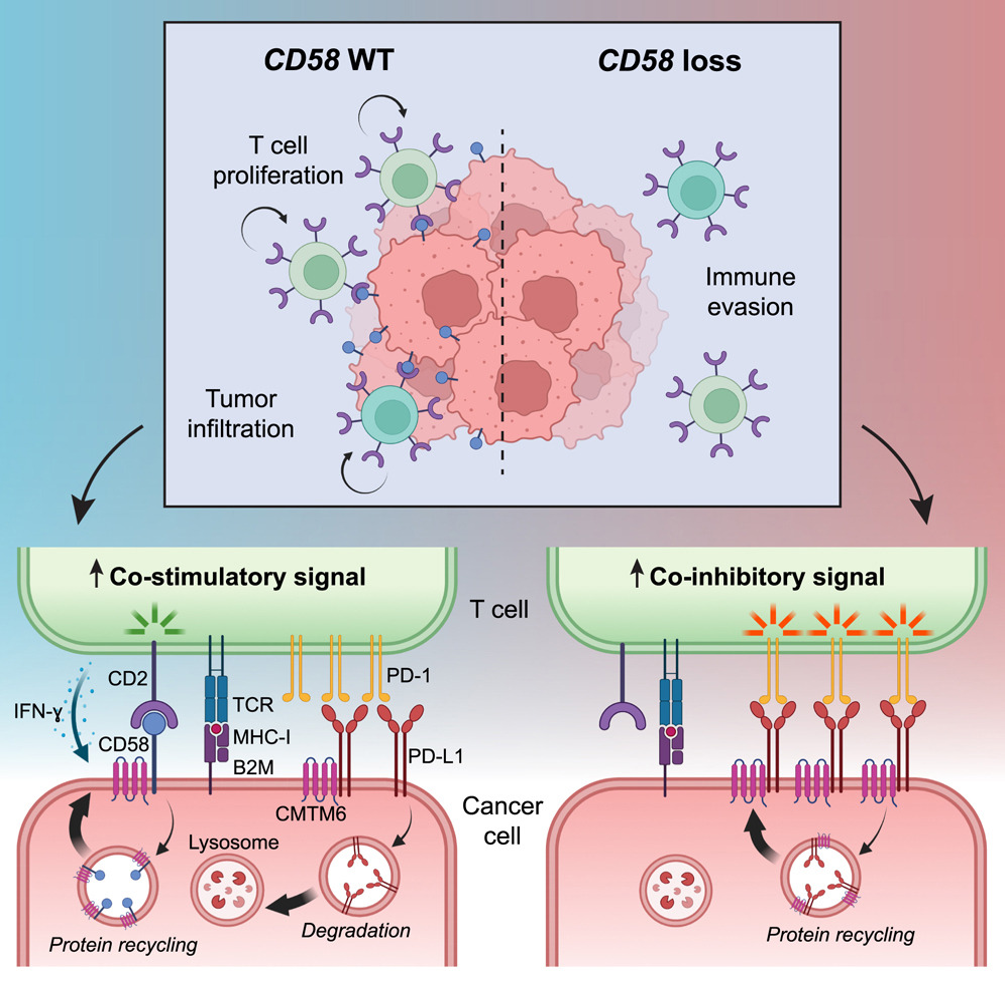
The double hit of CD58 loss: impaired T-cell activation and concurrent PD-L1 upregulation, with CMTM6 as the shared “stabilizing protein” for both [7]
4. CD2's revival: three therapeutic approaches
Therapy 1: CD2 CAR-T for T-cell malignancies
T-cell malignancies have long lacked ideal targets — tumor and normal T cells share overlapping surface markers, so CAR-T cells undergo fratricide. CD2 offers a way around this problem: a University of Pennsylvania analysis found CD2 immunohistochemistry positivity in 92.1% (82/89) of adult peripheral T-cell lymphoma (PTCL) samples, far above the current leading target, CD7 (42.2%) [9].
The engineering approach has now been validated: knocking out CD2 in the CAR-T product prevents fratricide, and knocking out the TCR prevents GVHD. The University of Washington team’s UCART2 significantly prolonged survival in T-ALL and cutaneous T-cell lymphoma mouse models. CD2 knockout also blunts secretion of granzyme B and IFN-γ, a defect reversible with long-acting IL-7 [10]. Penn’s analogous CART2 extended median overall survival from 30 to 138 days (p=0.0007) in a humanized T-ALL PDX model [9].
These knockouts confirm that CD2 signaling is essential for CAR-T function. They also inspired strategies to bypass CD58 loss, such as “PD-1–CD2 switch receptors” [6].
Therapy 2: CD2-costimulatory bispecifics for solid-tumor TCEs
CD3 bispecific T-cell engagers (TCEs) have succeeded in hematologic cancers but stall in solid tumors because of dose-limiting toxicity and insufficient costimulation; only tarlatamab has reached a solid-tumor approval. In June 2026, an Evotec team reported a new solution in mAbs: a HER2×CD2 bispecific built on a “non-blocking” anti-CD2 antibody, paired with an EpCAM×CD3 TCE. In this design, the tumor provides the anchor while CD2 delivers the costimulatory signal.
In humanized mice, low-dose TCE alone produced complete responses in only 1 of 9 animals, versus 8 of 9 when HER2×CD2 was added. The combination directly compensates for tumor CD58 loss, mobilizes CD28-negative CD8⁺ T cells, and releases far fewer cytokines than CD28-class bispecifics — an advantage on both efficacy and safety [11] . CD58 loss is thereby converted from a resistance mechanism into a therapeutic opportunity.
Therapy 3: New agents for autoimmunity and transplantation
CD2's first therapeutic use was in autoimmunity: alefacept (an LFA-3–Fc fusion protein) was approved for psoriasis in 2003 and withdrawn in 2011, but the idea of targeting CD2 in immune disease never went away [14-15].
Two investigational products are now advancing this approach in the clinic. The humanized anti-CD2 mAb siplizumab (TCD601) binds a unique epitope distinct from the CD58-binding site, with a Kd of about 1 nM. It combines effector T-cell depletion with Treg enrichment. Siplizumab is now in a Phase IIb trial of kidney-transplant induction (NCT07508787, recruiting), following earlier testing in type 1 diabetes (DESIGNATE, NCT05574335) [3] [16] [17].
The second-generation LFA-3 fusion protein SBT115301 exploits differential CD2 expression — high on effector T cells but low on Tregs and naive cells — to selectively deplete memory effector T cells. In healthy volunteers, a single dose sustained their decline through Day 72, with good tolerability [13].
5. Conclusion: an old target, a new opportunity
More than forty years ago, CD2 was discovered as an “adhesion molecule”; twenty years ago, it was the target of the first biologic for psoriasis; today, it appears simultaneously in CAR-T design, in the costimulatory arms of bispecifics, and in autoimmune-drug pipelines.
Targets don’t become obsolete — they are simply not yet fully understood. PD-1 inhibitors embody the logic of the “brake”; CD2–CD58 provides the logic of the “accelerator” — especially for solid tumors and elderly patients, where CD28-negative T cells abound. Unique to humans and other higher primates, this axis may prove important for the next generation of immunotherapy.
Featured Products
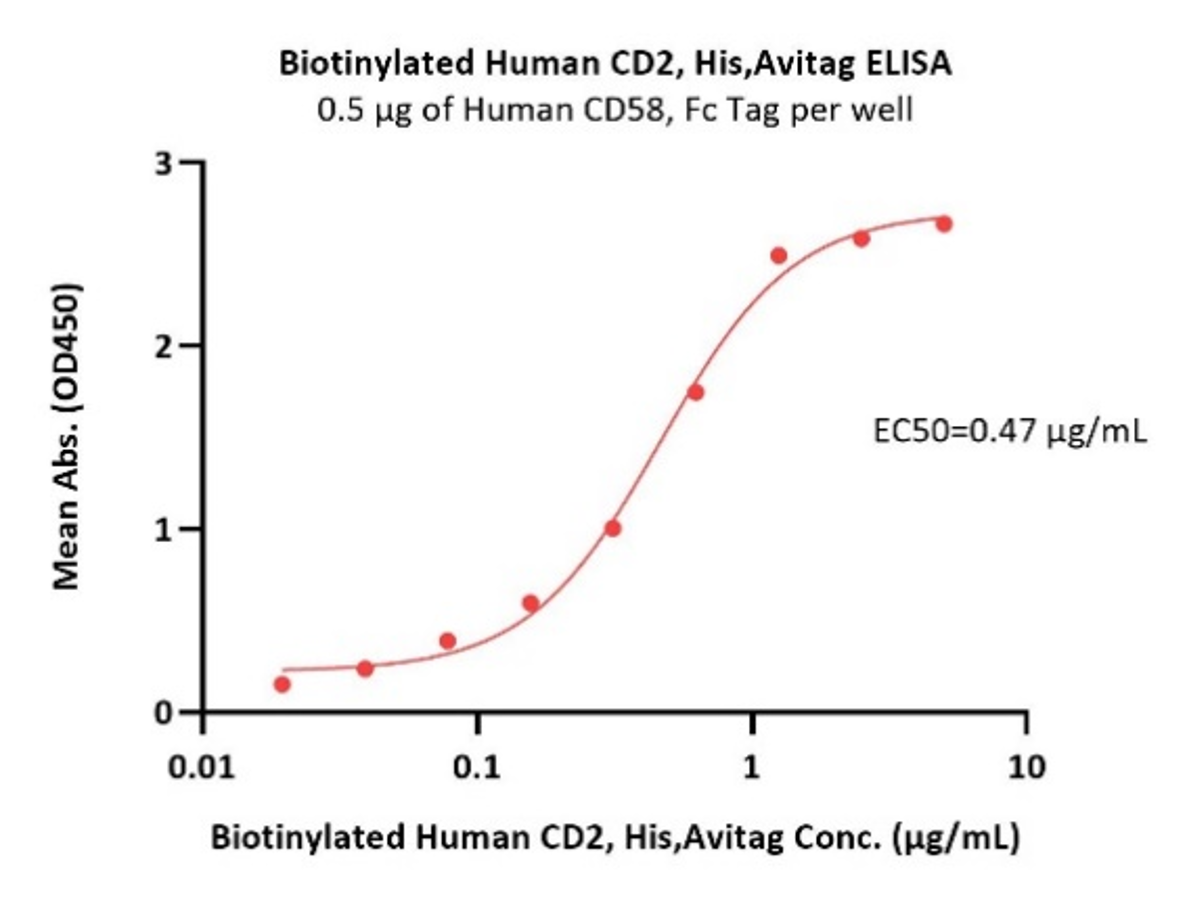
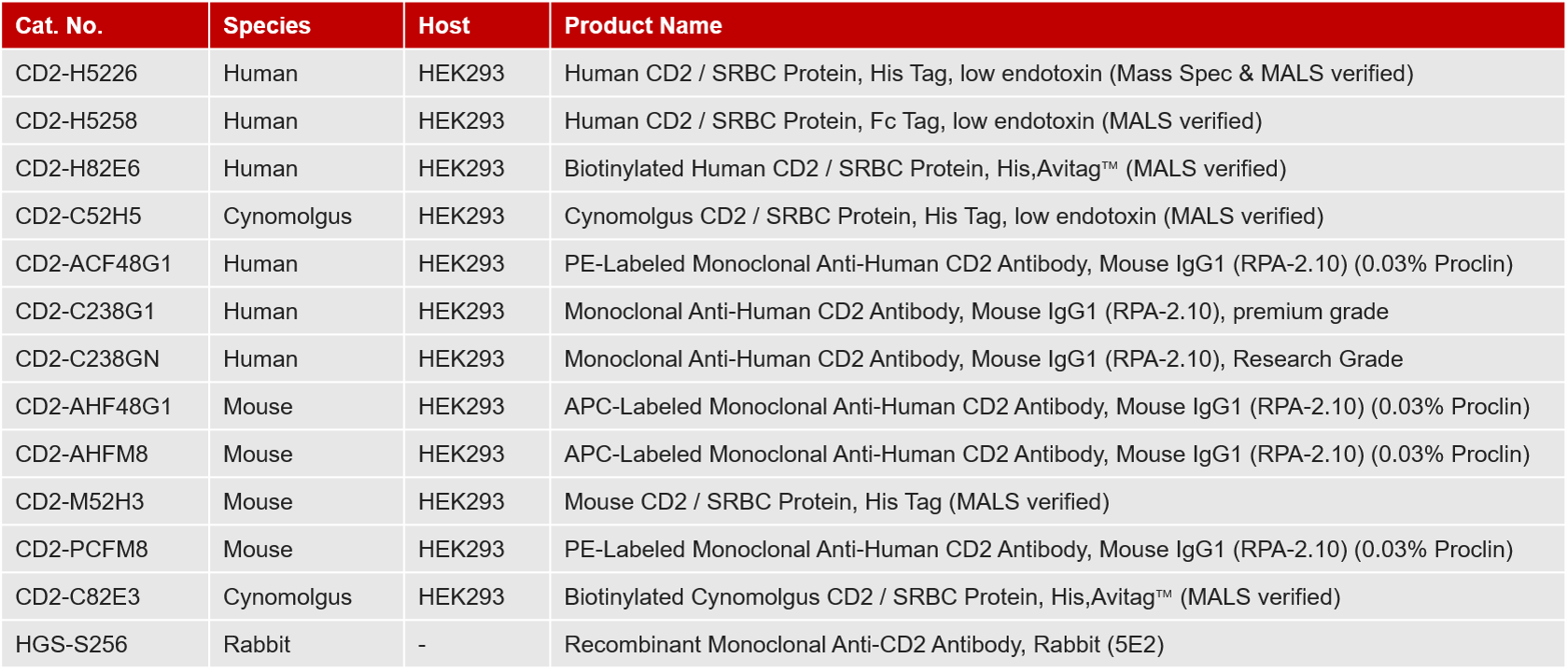
ACROBiosystems offers multi-species (human, mouse, rabbit, cynomolgus monkey) CD2/CD58 recombinant proteins, fluorescently labeled proteins, biotinylated proteins, and anti-CD2/CD58 antibodies, supporting CD2–CD58 interaction assays, TCE functional validation and CAR-T research — covering the full workflow from target validation and antibody screening through manufacturing QC to preclinical and clinical studies.
Product List
Validation Data
High Protein Purity Verified by SEC-MALS
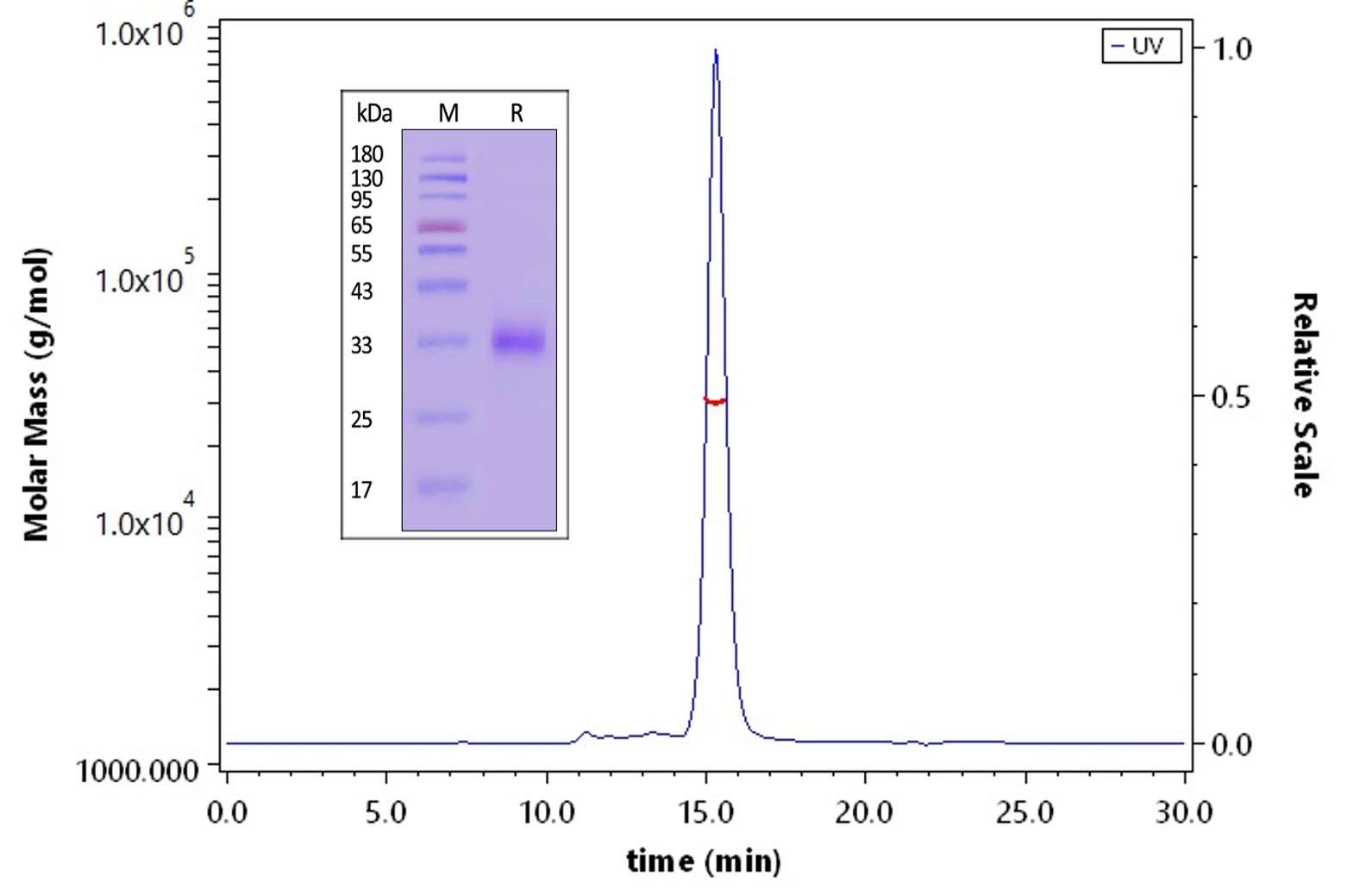
The purity of Human CD2, His Tag (Cat. No. CD2-H5226) is more than 95% and the molecular weight of this protein is around 23-35 kDa verified by SEC-MALS.