


 Nov 17, 2026
 Page Views:61


Introduction
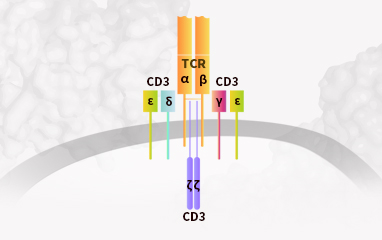
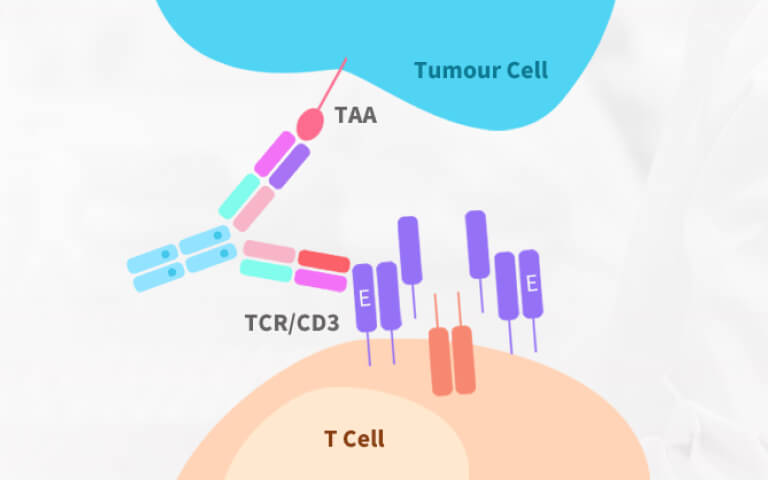
T-cell engagers (TCEs) are bispecific or multispecific molecules that simultaneously target tumor-associated antigens (TAAs) and CD3 on T cells. By physically bridging T cells and tumor cells, TCEs promote immune synapse formation and trigger T-cell–mediated cytotoxicity. While TCEs have demonstrated remarkable efficacy in hematologic malignancies, their extension to solid tumors presents distinct challenges. Many TAAs are also expressed at low levels in normal tissues, creating a risk of on-target/off-tumor toxicity. Consequently, improving tumor selectivity has become a central focus in the design of TCEs for solid tumors.
Early TCE engineering efforts primarily sought to balance efficacy and safety by modulating CD3 affinity, molecular architecture, or dosing regimens. However, these approaches largely adjusted the intensity of activation. As the field has evolved, the design philosophy has shifted toward a more fundamental question: can a TCE be programmed to distinguish target cells and to sense the permissive context for activation? This shift has given rise to logic gating and conditional activation as key strategies for precision control.
Logic Gating: Using Multiple Tumor Signals to Define the Target
The core idea of logic gating is to incorporate multiple tumor-associated signals and use predefined combinatorial rules to enhance selectivity for target cells. Among these, the AND logic gate is a representative strategy: TCE activity is restricted to cells that co-express two specified antigens, thereby narrowing the therapeutic window¹.
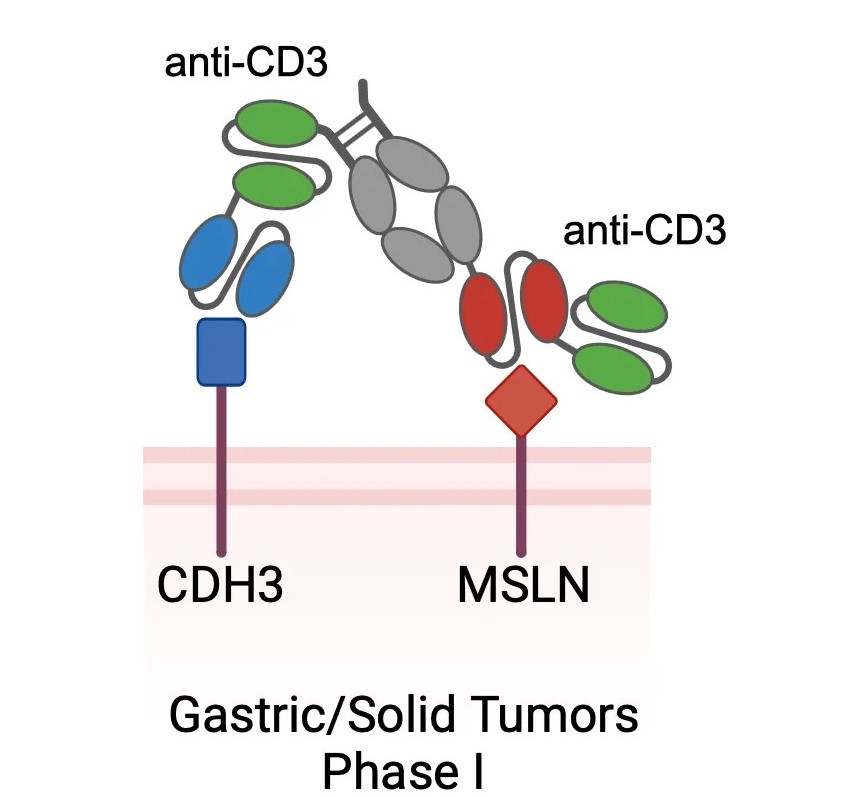
AMG 305 exemplifies this approach. The molecule targets CDH3, MSLN, and CD3, leveraging bivalent binding to CDH3 and MSLN to preferentially engage and kill CDH3⁺MSLN⁺ cells. Preclinical studies showed that AMG 305 exhibits markedly stronger cytotoxic activity against double-positive cells, while activity is substantially reduced against cells expressing only one of the two antigens². The molecule is currently being evaluated in a Phase I clinical trial for advanced solid tumors³.
https://doi.org/10.3389/fimmu.2024.1492782
Figure 1. Mechanism of action of AMG 305
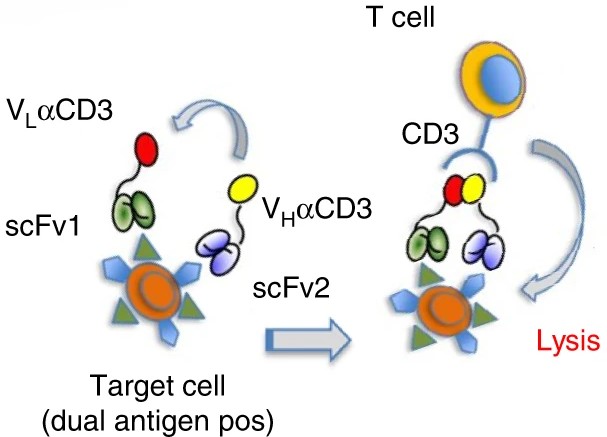
To reinforce AND logic at the structural level, split-CD3 TCEs offer an alternative design. In this approach, the variable heavy (VH) and variable light (VL) chains of an anti-CD3 antibody are separated and fused to distinct tumor antigen–binding modules. When both modules bind to different antigens on the same cell, VH and VL are brought into proximity, restoring a functional CD3-binding site and triggering T-cell activation. Applied to EGFR/HER2 double-positive breast cancer cell models, this split design demonstrated that the two complementary fragments synergize to induce cytokine production and selective killing of dual-antigen–positive cells⁴.
https://doi.org/10.1038/s41467-019-13196-0
Figure 2. Mechanism of split-CD3 TCE
Conditional Activation: Letting the Tumor Microenvironment Determine When to Activate
If logic gating answers “who is the target,” conditional activation addresses “when activation should occur.”
The tumor microenvironment (TME) differs from normal tissues in several biological features—including aberrant protease activity, acidic pH, hypoxia, and distinct cytokine profiles—which can be exploited as input signals to control TCE activity. A representative strategy is molecular masking: the TCE’s targeting or CD3-binding function is temporarily suppressed in peripheral tissues and restored upon exposure to specific TME cues.
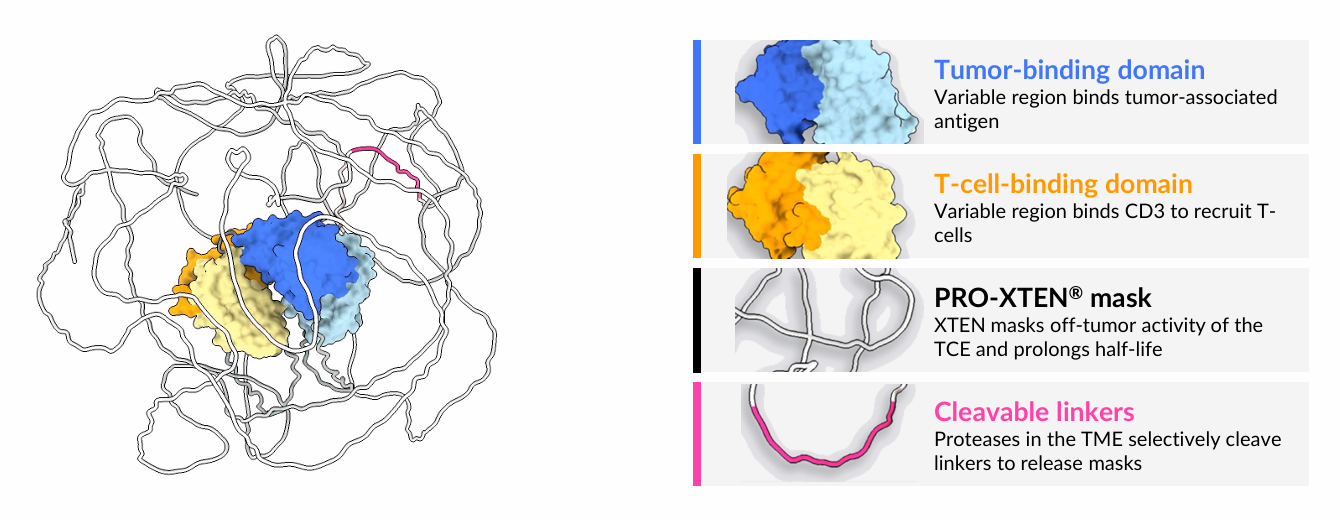
VIR-5500 (AMX-500) employs a dual-masking design based on the PRO-XTEN platform. Proteases enriched in the TME cleave the masking linkers, unmasking the TCE and concentrating its activity within the tumor. Phase I data in metastatic castration-resistant prostate cancer (mCRPC), disclosed in 2026, showed that at doses ≥3000 μg/kg administered every 3 weeks (Q3W), PSA50 and PSA90 response rates reached 82% and 53%, respectively, with a RECIST objective response rate of 45% in evaluable patients⁵.
Source: Vir Biotechnology website
Figure 3. PRO-XTEN dual-masking molecular structure
The Boundaries of Precision: New Variables and New Challenges
Precision design does not imply that adding a single condition resolves all safety concerns for TCEs. For AND logic gates, the co-expression frequency, antigen density, and tumor heterogeneity of the two targets directly influence selectivity. A sufficiently high proportion of tumor cells must stably co-express both antigens; otherwise, an overly stringent combinatorial requirement may limit tumor coverage. For split-CD3 designs, additional considerations include the pairing efficiency of the two binding modules, structural stability, and overall developability⁴.
Conditional activation faces its own hurdles. The TME is not uniformly homogeneous, and protease expression or other triggering signals may vary across tissues and individuals. Moreover, the stability of masking structures, de-masking efficiency, and activation kinetics all affect the ultimate performance. Thus, precision engineering of TCEs is not simply about stacking more “switches,” but about achieving a refined balance among selectivity, activity, and developability.
Conclusion
From modulating “activation intensity” to programming “activation conditions,” the molecular engineering of TCEs for solid tumors is evolving from simple targeting and activation toward fine-grained control of recognition and activation processes. Whether by constructing logic gates with multiple tumor antigens or enabling conditional activation via the TME, the central goal remains enhancing selectivity for tumor cells while preserving potent killing capacity. As our understanding of tumor antigen expression and microenvironmental features deepens, an expanding repertoire of programmable variables will become available for TCE design.
Featured Products
|
|
|
|