



 Nov 26, 2026
 Page Views:59


Expression Construct Design: From Target Sequence to Expression Vector
Target Coding Sequence and Regulatory Elements
The target coding sequence defines the primary amino acid sequence of the expressed polypeptide. Record the reference isoform, residue range and any intended substitutions. Check the reading frame across each fusion junction. A stop codon at the end of the target is appropriate for an untagged C-terminus but would prevent translation of a downstream tag.[1]
Promoters, Signal Peptides and Vector Components
Match the promoter and translation-initiation elements to the host. For example, a T7 promoter requires a system that supplies T7 RNA polymerase, while CMV and EF1α promoters are commonly used in mammalian vectors. Check that the vector provides the appropriate transcription termination or polyadenylation signals.
For a secreted mammalian ECD, place the secretion signal upstream of the mature protein. The signal directs the nascent chain into the secretory pathway, where disulfide formation and glycosylation can occur. Verify the predicted cleavage junction when replacing the native signal or adding a tag near the mature N-terminus.[2]
Linkers and Cleavage Sites
A linker separates the target from its fusion partner. A protease recognition site allows the partner to be removed after capture. If the experiment requires a native terminus, map the residues that will remain after cleavage before ordering the construct. A TEV cleavage site, for example, must be accessible to the protease and compatible with the intended cleavage junction.[3]
Protein Domain and Construct Format Selection
Full-Length Proteins, ECDs and Truncated Constructs
Retain the full-length protein when activity depends on membrane presentation, communication between domains or an intracellular signaling region. For extracellular ligand recognition, a soluble ECD may be sufficient if it retains the complete binding surface. An isolated catalytic domain can support enzyme characterization, but removing a regulatory domain changes the question the construct can answer.
Functional Domain and Boundary Selection
Map catalytic residues, disulfide pairs and binding interfaces onto the sequence. Inspect experimental structures and sequence alignments before choosing the first and last expressed residues. Removing a hydrophobic membrane anchor can improve soluble recovery, but shortening the adjacent extracellular region may disrupt a domain or its contact with a neighboring subunit. Where the endpoint is uncertain, compare nearby boundaries that preserve these features.[1]
Figure 1 illustrates how to compare candidate boundaries. The alignment shows whether a proposed endpoint falls in a conserved stretch. The tracks below it place predicted helices, disorder and annotated domains on the same residue scale. Where those clues disagree, retain alternative endpoints rather than committing the entire screen to one prediction.
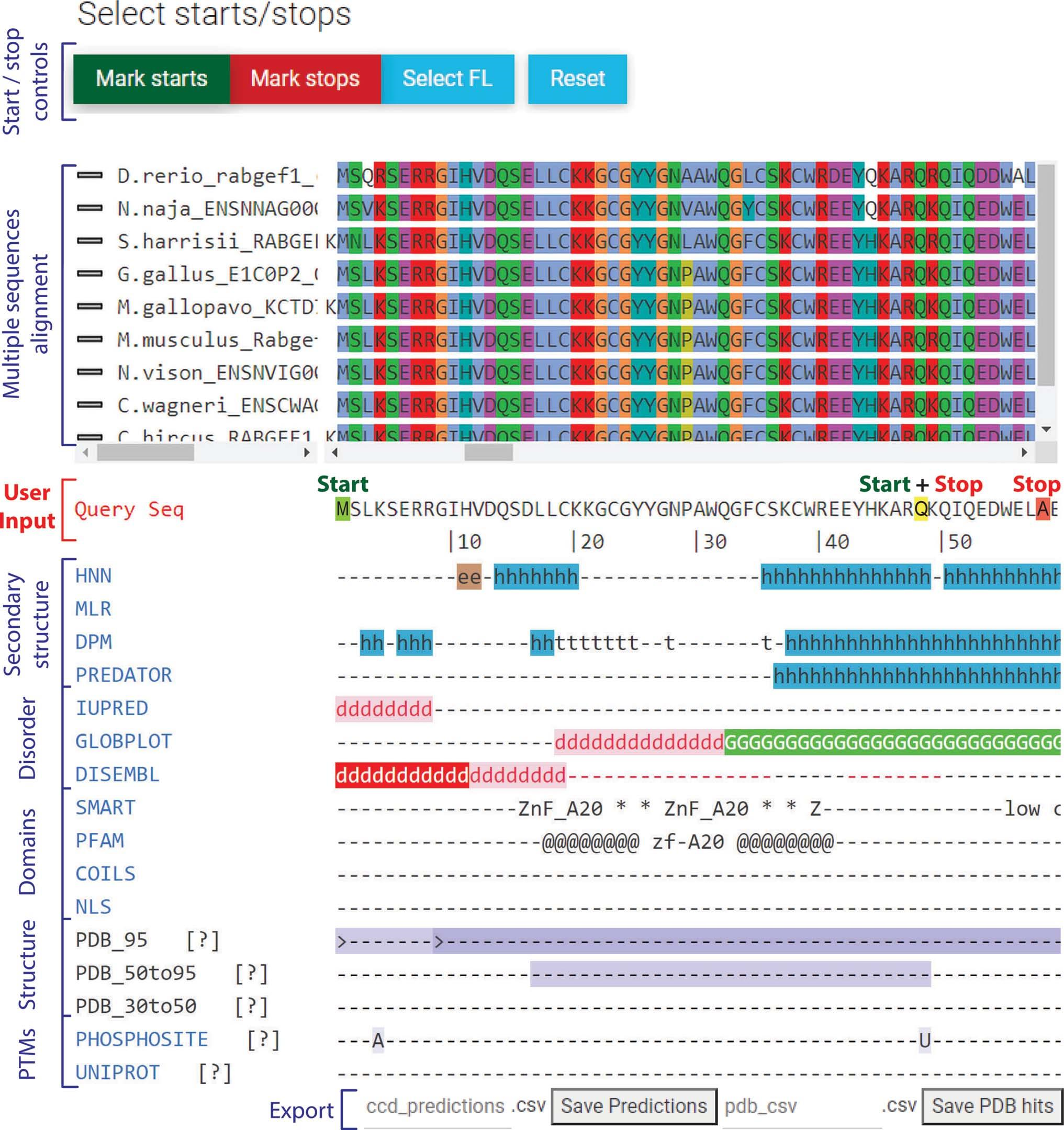
Figure 1. Sequence alignment and structural annotations used to select candidate start and stop positions in CCD². Reproduced from Murachelli et al.1 under CC BY 4.0.
Source: https://doi.org/10.1107/S2059798321005891
Selecting the Right Protein Construct Format
Table 1. Recombinant Protein Construct Formats and Their Research Applications
Research question | Candidate format | Interpretive constraint |
|---|---|---|
How strongly does a single binding site bind its ligand? | Monomeric ECD | Confirm the relevant interface and monomeric state.A |
Can antibodies recognize the extracellular target? | ECD–Fc fusion | Bivalency can strengthen apparent binding through avidity. |
Does a ligand activate its receptor? | Relevant oligomer, e.g., a trimeric TNF-family ligand | Preserve the assembly required for receptor clustering. |
Do two chains form a functional interface? | Co-expressed complex, e.g., IL-12 p35/p40 | Retain both chains and their contact surface. |
Tag Engineering and Sequence Optimization
Affinity and Functional Tag Selection
Table 2. Common Protein Tags and Key Design Considerations
Tag | Reason to choose it | Design consideration |
|---|---|---|
His | Metal-affinity capture with a short peptide tag. | Keep the tag accessible and consider a cleavage site if the assay requires an untagged target. |
Fc | Protein A capture and bivalent presentation with a conventional dimeric IgG Fc. | Check whether bivalency suits the binding question. |
AviTag | Site-specific enzymatic biotinylation for streptavidin-based immobilization. | Place the tag away from the binding surface and verify biotinylation. |
Strep-tag II | Direct capture on Strep-Tactin under mild conditions. | The tag must remain accessible. Unlike AviTag, it binds its capture reagent without enzymatic biotinylation.⁵ |
For example, a receptor ECD that carries both Fc and AviTag can be immobilized through biotin while retaining Fc-mediated bivalency. Site-specific capture controls the attachment point. It does not make the ECD monovalent. If avidity could obscure the interaction of interest, compare the Fc fusion with a monomeric construct displaying the same extracellular sequence.
N-Terminal vs. C-Terminal Tag Placement
Inspect both termini in the functional assembly. A terminus exposed on an isolated subunit can lie near a ligand or another chain in the complex. For secreted proteins, place an intended mature N-terminal tag after the signal peptide and check the cleavage junction. A C-terminal tag is an alternative when that terminus is accessible and dispensable for the measured function.
If either orientation appears plausible, compare the same domain with the same tag at opposite termini. Measure both target binding andb tag-mediated capture. Efficient capture establishes that the tag is accessible, while target binding tests whether the partner can still reach its interface.
Linker Design and Sequence Optimization
A flexible Gly-Ser linker can provide a bulky Fc fusion partner with grester spatial freedom relative to the target. If an intact fusion shows weak binding, compare linker lengths while keeping the tag and boundaries constant. Longer linkers also allow more conformational freedom, which may be undesirable when the experiment requires a defined orientation.[3]
At the DNA level, synonymous substitutions can adjust codon usage or remove a cryptic splice signal without changing the encoded protein. Treat changes to cysteines or potential glycosylation sites differently: these alter the protein sequence and may affect folding or recognition. Preserve them unless there is a specific hypothesis to test.
AI-Assisted Design and Experimental Construct Validation
AI-Based Structure Prediction and Domain Analysis
Where experimental structures cover only part of the target, an AlphaFold model can help locate a compact domain or show that a proposed endpoint falls inside a helix. Inspect local prediction confidence alongside conservation and known contacts. Low confidence alone does not justify deleting a segment, particularly if it may engage a binding partner. Use models to nominate boundaries for comparison.[1,4]
Construct Generation and Small-Scale Screening
Build a small panel around the main uncertainty. To test an ECD endpoint, vary the boundary while keeping the secretion signal and tag fixed. To test tag interference, keep the boundary fixed. Verify the coding sequence and junctions, then compare variants under matched expression conditions. For a secreted ECD, assess intact protein recovered from the medium. For an intracellular domain, distinguish soluble recovery from total expression.[1,2]
Balancing Protein Folding, Solubility, Stability and Bioactivity
A shorter fragment may remain soluble but lose a contact needed for binding. An Fc fusion may improve recovery yet change the apparent interaction through avidity. Compare candidates at the concentration and over the holding period relevant to the assay. Assess whether each remains intact and soluble, then test the binding or activity it was designed to retain. A stable fragment with weak activity warrants a different design change from an active fragment that precipitates during handling.
A useful comparison is the amount of active reagent remaining at the end of the experiment. If two candidates bind equally well when fresh, repeat the comparison after the planned holding period. Loss of soluble material suggests a different limitation from loss of binding at a matched soluble concentration.
Iterative Construct Optimization
Use the first screen to select the next comparison. Fragmentation near a fusion junction suggests testing a different junction or boundary. For an intact ECD with weak binding, compare tag positions or test tag-cleaved material. If binding persists but receptor activation is weak, revisit the required oligomeric state. Change one feature per comparison where feasible.
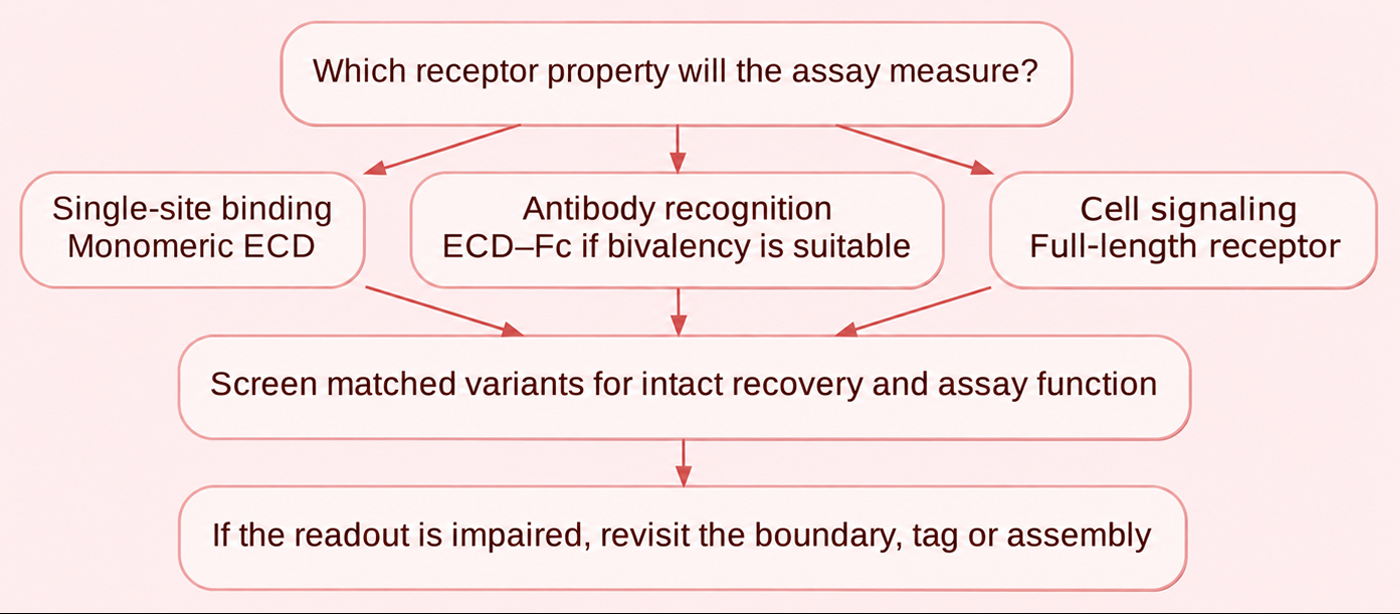
Figure 2: Construct selection for three receptor assays. Compare variants within each format before revising the feature most likely to explain an impaired readout.
Conclusion
Recombinant protein design begins with the function the experiment needs to preserve. Construct format, domain boundaries, vector components, and tag placement should support that requirement. AI-assisted structure prediction can help identify candidate boundaries when considered alongside experimental structures, sequence conservation, and known functional contacts. Small-scale screening then compares variants for intact, soluble recovery, stability, and the binding or activity required by the assay. These results guide further adjustments to boundaries, tag positions, linkers, or assembly states, helping researchers select a construct suited to the intended application.
ACROBiosystems establishes comprehensive construct engineering and production platforms tailored to target structural biology and downstream experimental applications. Providing full-length membrane proteins, soluble extracellular domains, Fc-fusions, authentic oligomers, multi-subunit complexes, and engineered point mutants, ACROBiosystems validates reagents across purity, structural homogeneity, molecular mass, binding kinetics, and cellular potency to deliver dependable molecular tools for biomedical research.