COA



- Reviews & Citations

BTLA,CD272
Mouse BTLA, Fc Tag (BTA-M5253) is expressed from human 293 cells (HEK293). It contains AA Glu 30 - Gly 176 (Accession # Q32MV9).
Predicted N-terminus: Glu 30
This protein carries a human IgG1 Fc tag at the C-terminus.
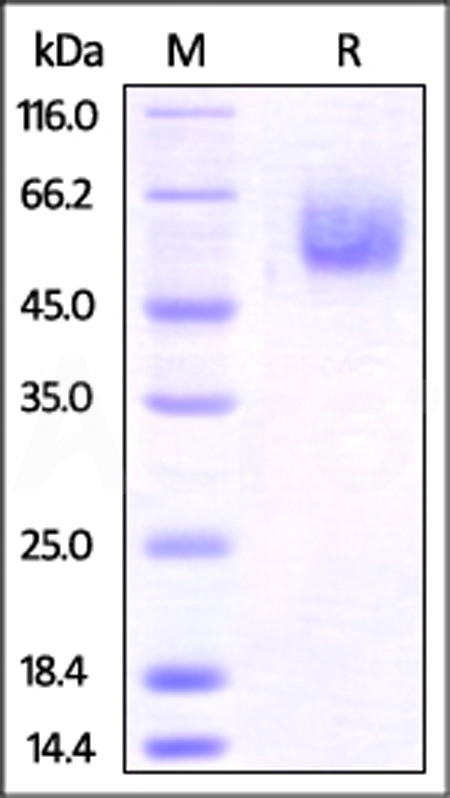
The protein has a calculated MW of 42.8 kDa. The protein migrates as 55-66 kDa under reducing (R) condition (SDS-PAGE) due to glycosylation.
Less than 1.0 EU per μg by the LAL method / rFC method.
>95% as determined by SDS-PAGE.
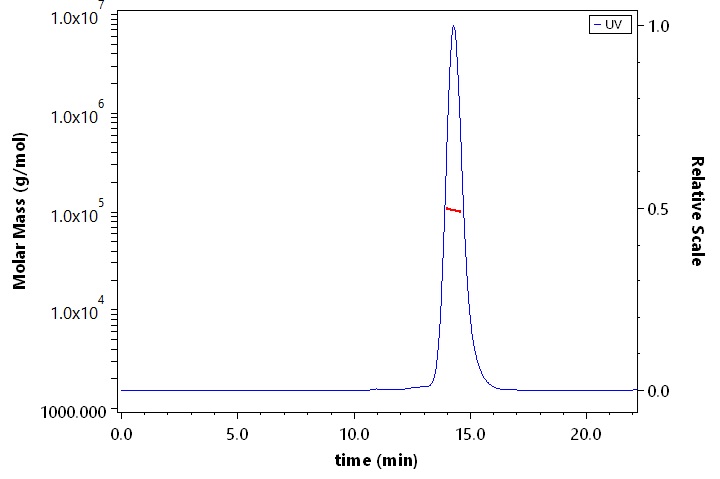
>90% as determined by SEC-MALS.
Lyophilized from 0.22 μm filtered solution in Tris with Glycine, Arginine and NaCl, pH7.5 with trehalose as protectant.
Contact us for customized product form or formulation.
Please see Certificate of Analysis for specific instructions.
For best performance, we strongly recommend you to follow the reconstitution protocol provided in the CoA.
For long term storage, the product should be stored at lyophilized state at -20°C or lower.
Please avoid repeated freeze-thaw cycles.
This product is stable after storage at: