COA
- Reviews & Citations



ID | Components | Size |
RIPO-HWM002K-C01 | Basal medium A | 5.4 mL |
RIPO-HWM002K-C02 | Basal medium B | 22.5 mL |
RIPO-HWM002K-C03 | Basal medium C | 27 mL |
RIPO-HWM002K-C04 | Basal medium M-M | 22.5 mL |
ID | Components | Size |
RIPO-HWM002K-1-C01 | Medium F | 3 mL |
RIPO-HWM002K-1-C02 | Supplement A | 0.6 mL |
RIPO-HWM002K-1-C03 | Supplement B | 2.5 mL |
RIPO-HWM002K-1-C04 | Supplement C | 3 mL |
RIPO-HWM002K-1-C05 | Supplement M-M | 2.5 mL |
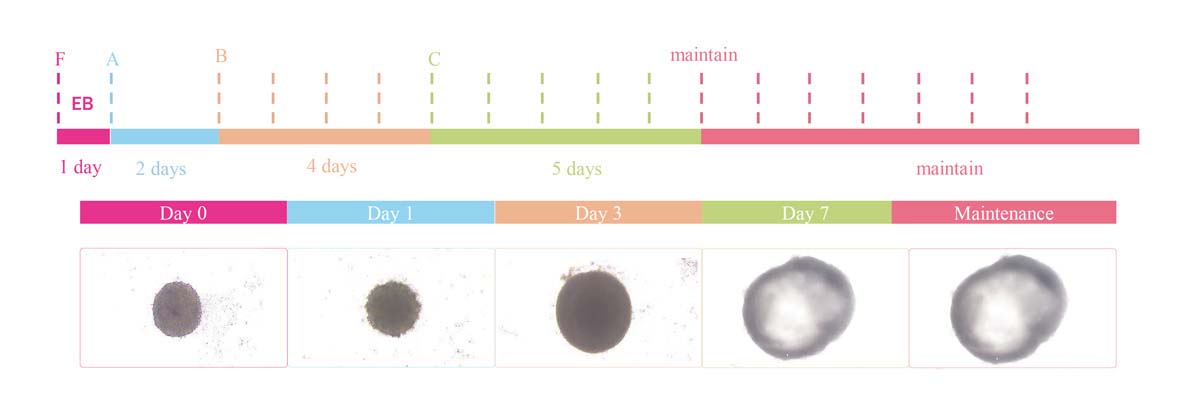
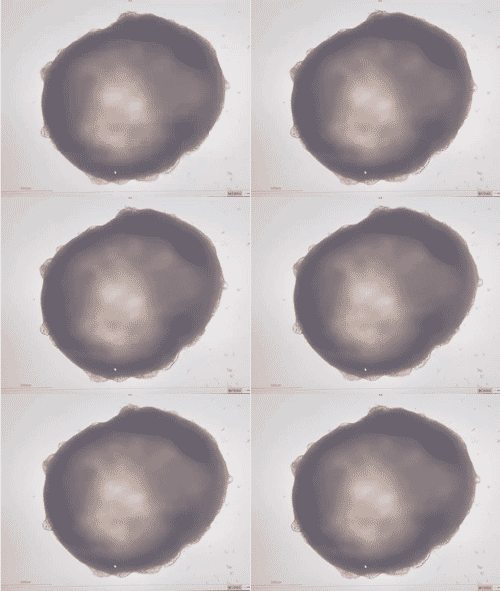
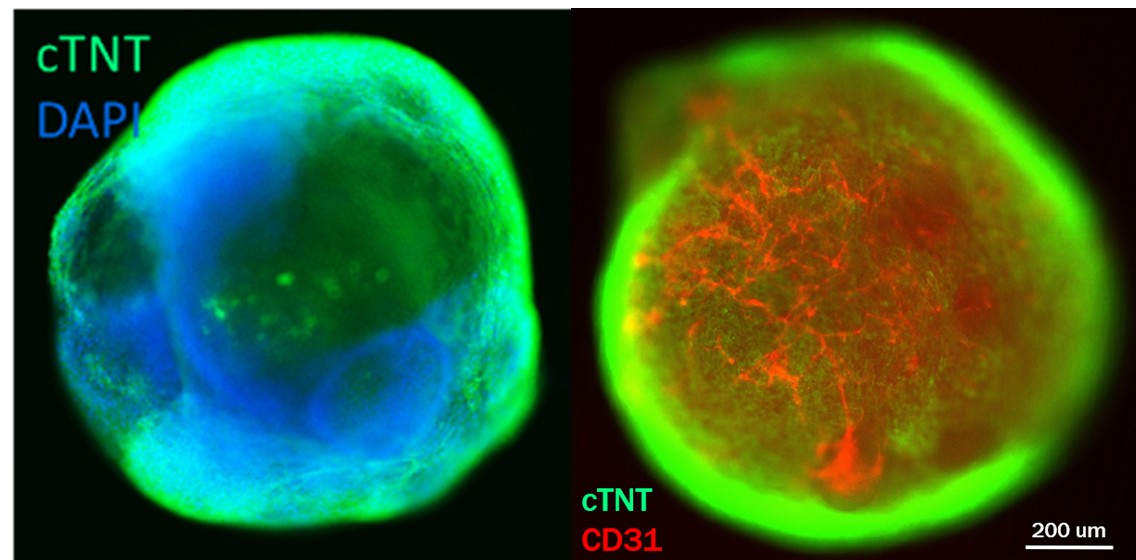
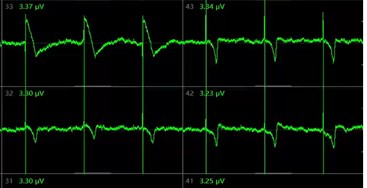
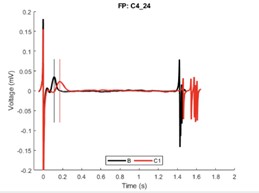
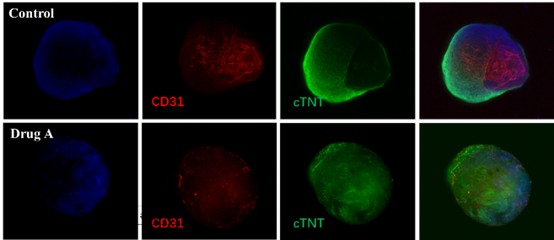
Human iPSC-Derived Cardiac Organoid differentiation Kit (Catalog No#: RIPO-HWM002K) allows hESC or iPSC to differentiate into cardiac organoids. Cardiac organoids are three-dimensional in vitro models with a cellular composition and structural organization that is representative of the human heart. This kit can produce 24 cardiac organoids in four steps. Differentiation was carried out by forming EBs from PSC at an ultra-low adsorption interface, and then changing the medium according to the instructions. A spontaneously beating cardiac organoid with a cavity can be seen between days 9 and 13 of the onset of differentiation. Cardiomyocyte, key cellular component of cardiac organoid, are responsible for the beating of the cardiac organoids. The beating rate of the formed cardiac organoids increases dramatically when stimulated with isoproterenol or forskolin, and there is a linear relationship between the concentration of the drug and the beating rate over a range of concentrations.
The basic medium of this differentiation kit is a serum-free, well-defined medium with minimal batch variation to which differentiation factors are added. This medium does not contain antibiotics, the addition of which may affect cardiac organoid differentiation.
The unopened Box A is stable for 12 months from the date of manufacture if stored under 2-8°C.
The unopened Box B is stable for 12 months from the date of manufacture if stored under -20°C.
The opened kit should be stored according to components table.