

Recombinant Monoclonal Anti-C-MET Antibody, Rabbit (1A1)

Product Number/Spec
Price
Availability
Menge
HGS-S303-20ul
$140.00
In Stock - Delivery in 1-2 business days
HGS-S303-100ul
$480.00
In Stock - Delivery in 1-2 business days
Product Amount:
$ 0
0
Add to Cart
  • Product Details
  • Data Display
  • Reviews & Citations
  • Important Statement
  • Resources
Source

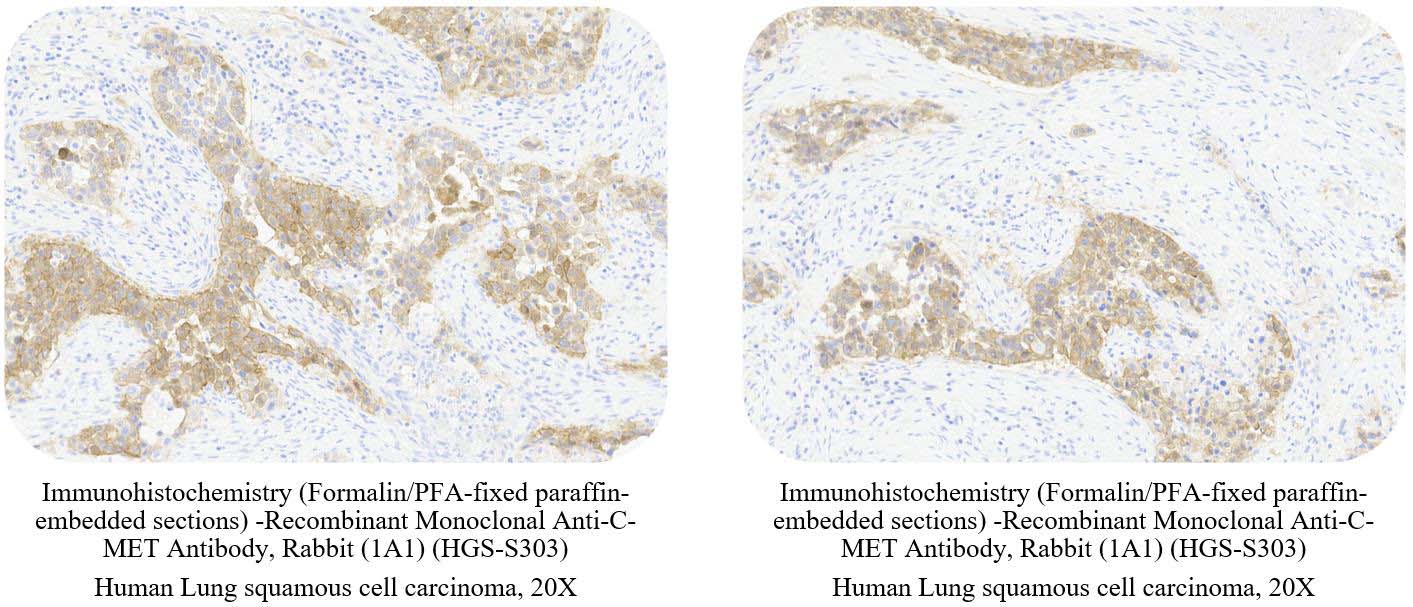
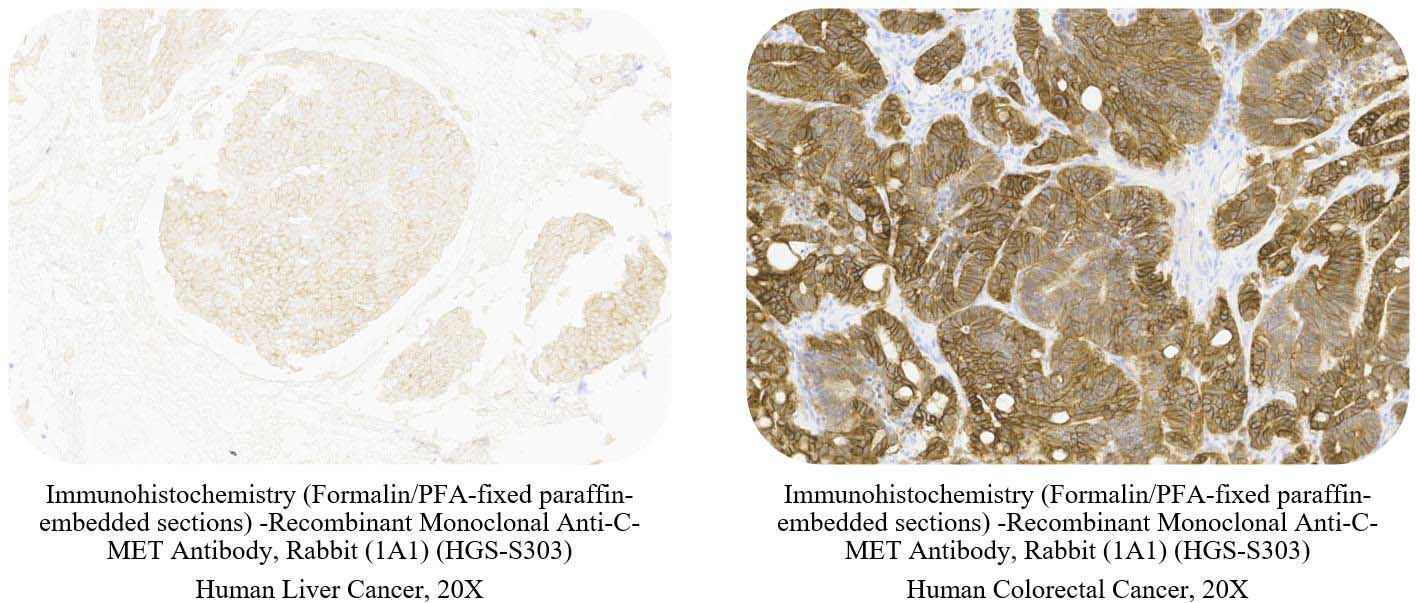
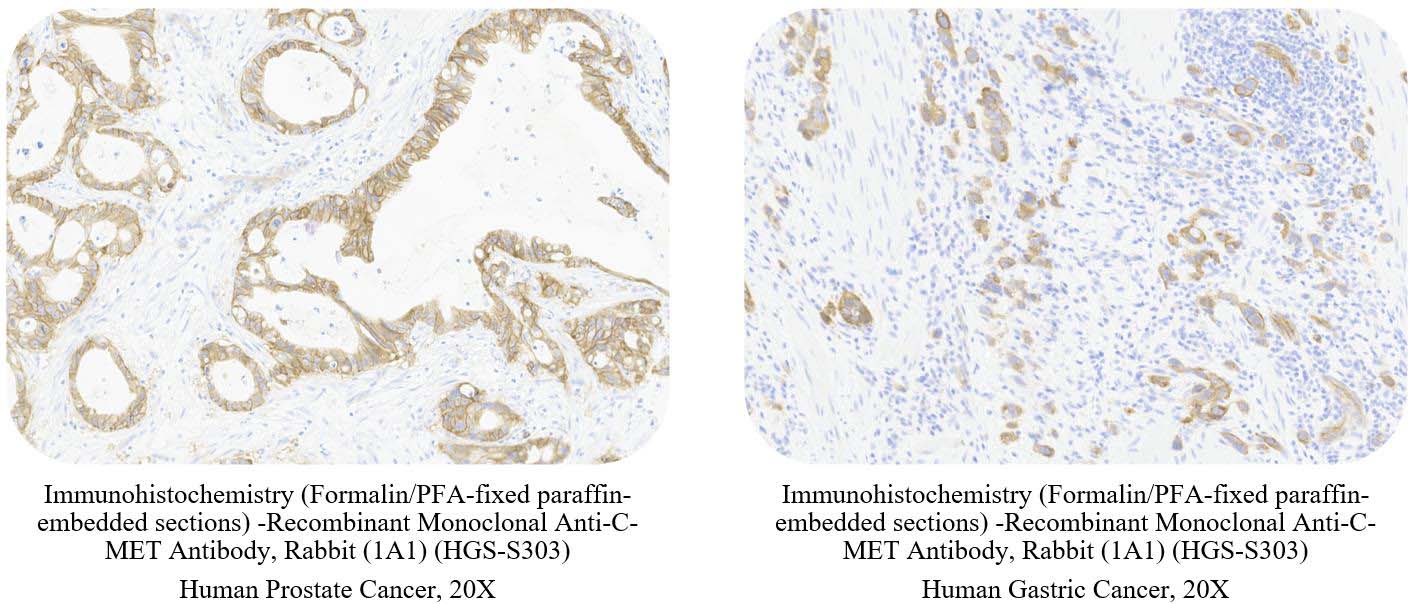
Recombinant Monoclonal Anti-C-MET Antibody, Rabbit (1A1) is a C-MET primary antibody for IHC application.

Antibody Type

Recombinant Monoclonal

Clone

1A1

Isotype

Rabbit IgG, Kappa

Host Species

Rabbit

Reactivity

Human

Specificity

React with C-MET protein on the membrane of target cell/tissue.

Application
Application
Recommended Use
IHC-P
1: 500-1: 2000

* Recommended dilutions are for reference only. Optimal working concentrations may vary depending on your consumables, reagents, and assay conditions. We recommend optimizing for your specific system. No warranty is made regarding performance at any specific dilution.

Purification

Protein A purified

Concentration

0.9~1.1 mg/ml

Form

Liquid

Formulation

Supplied a 0.22 μm-filtered solution in PBS containing BSA, with Glycerol as protectant.

Please contact us for customized product forms or formulations.

Shipping

Liquid product is shipped at blue ice.

Storage

Please avoid repeated freeze-thaw cycles.

This product is stable after storage at:
  • 2°C to 8°C for 14 days;
  • -20°C to -70°C for 12 months.
Notices

Product Specific Notices: For research use only.

Background Introduction

MET is a tyrosine kinase receptor for the hepatocyte growth factor. It is linked to functions such as cell proliferation, scattering, morphogenesis, and survival. Ligand binding at the cell surface induces autophosphorylation of MET that provides docking sites for downstream signaling molecules. After activation of the ligand, MET interacts with the PI3-kinase subunit PIK3R1, PLCG1, SRC, GRB2, and STAT3. There interactions lead to the activation of signaling cascades including RAS-ERK, PI3, kinase-AKT, and PLCgamma-PKC. MET plays a role in embryonic development including gastrulation, development of muscles and neurons, angiogenesis, and kidney formation.

ACRO Scientific Leadership Award

Supporting the scientists driving cell & gene therapy forward

Apply Now